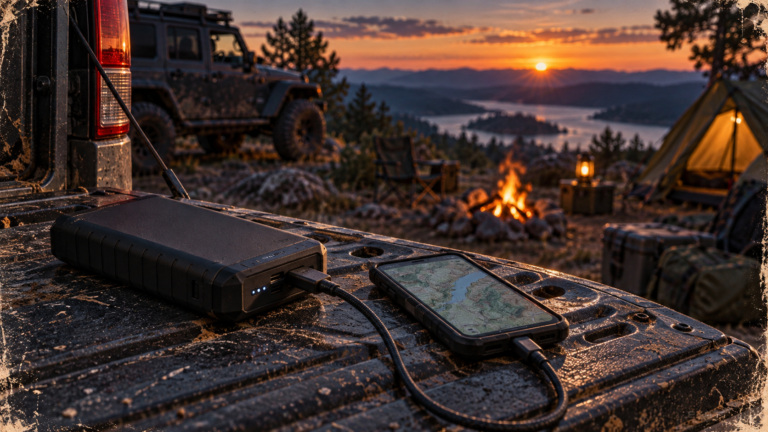
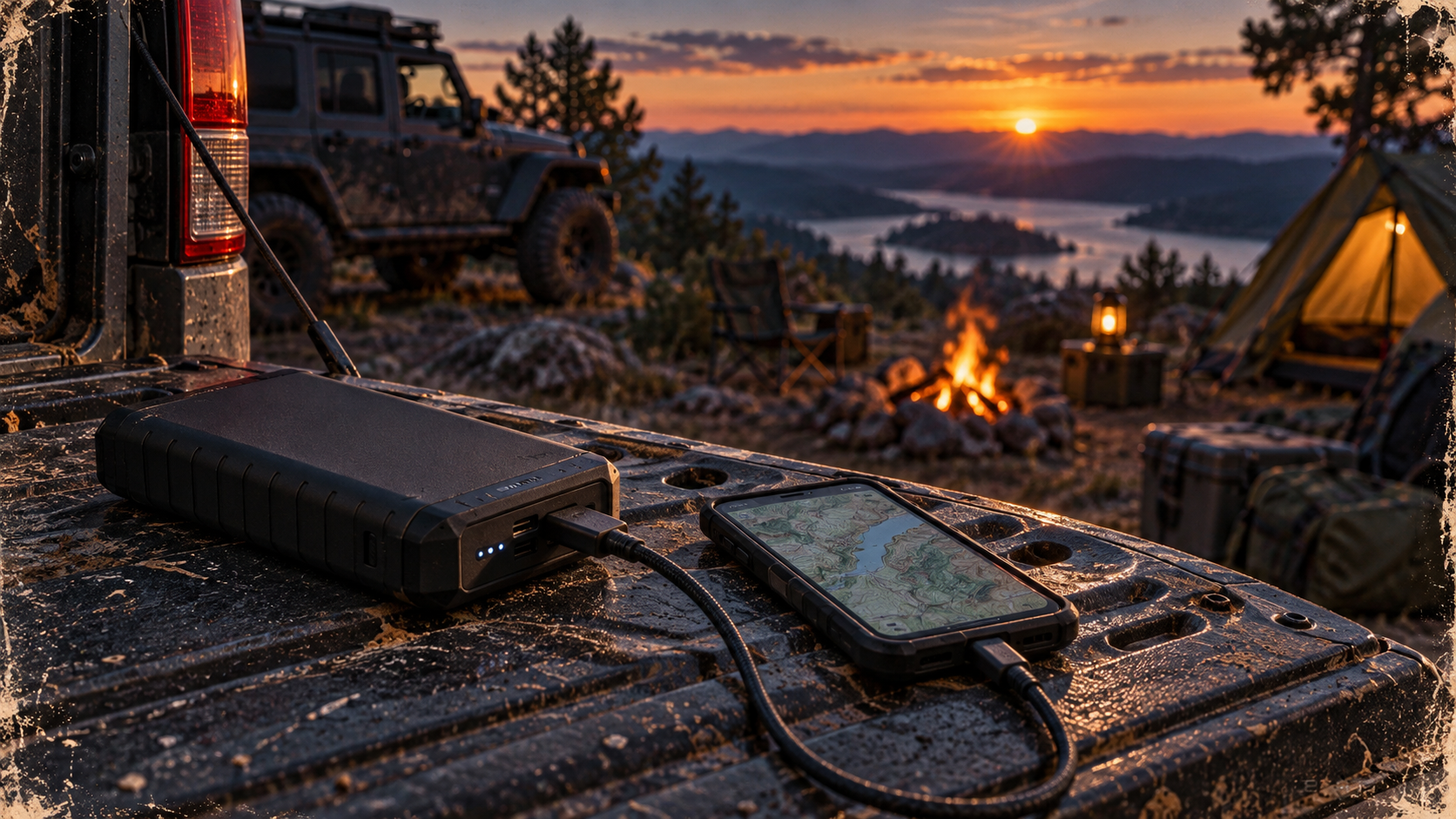
A Jeep can carry a lot of charging gear, but its outlets stop being useful when you leave the vehicle behind. That is the narrow reason to consider the Anker 737 Power Bank: it lets you carry USB power from a parked Jeep to camp, a trailhead, or a walk away from the vehicle. It is most relevant when several small electronics need charging and you do not want to run the Jeep simply to keep them powered.
As an Amazon Associate I earn from qualifying purchases. Some product links in this article are affiliate links.
The buying question is not whether 140 watts sounds impressive. It is whether this particular bank fits the part of your trip when the Jeep cannot serve as your outlet—and whether you have a dependable way to recharge the bank before you need it again.
Who has a real use for it?
Picture a beginner’s 4×4 day trip that ends with a few hours at camp. One phone carries downloaded maps, another belongs to a passenger, and a camera or other USB accessory needs attention before morning. A portable bank can move with the group rather than remain plugged into the dash. It also gives you a separate charging source if you turn the Jeep off for the evening.
That does not make it an emergency communication plan. The National Park Service cautions that cell service may be absent in parks even when a phone is fully charged. Keep your route and return plan with someone at home, and carry navigation and communication equipment appropriate to the area. If your route calls for a separate satellite device, work through when a satellite communicator is worth carrying; extra phone battery alone cannot create cell coverage.
What the Anker 737 actually provides
Anker identifies this model as the PowerCore 24K, model A1289. Its published specifications list a 24,000mAh battery, two USB-C output ports, one USB-A output port, and a 140W maximum total output. USB-C1 is the input used to recharge the bank. The listed weight is about 22 ounces, or 630 grams. Those details make it a carryable USB charging reserve, not an AC power station or a vehicle jump starter.
Two numbers deserve careful reading. The 24,000mAh rating describes the bank’s capacity; it does not promise a set number of phone charges on your trip. Likewise, 140W is a ceiling, not what every connected device will receive. Anker says reaching 140W requires a compatible USB Power Delivery 3.1 device and cable. If you plug in multiple devices, they share the bank’s available output. For a closer look at matching ports and cables to your electronics, see the device check for the Anker 737.
The screen can show charging information, which is useful for checking whether a connection is working. Treat it as a status aid, not a promise of how long an evening at camp will last. Your devices’ condition and usage matter too much for a universal runtime claim.
Verify the whole charging loop before buying
- Where does the bank get refilled? Check the charger and cable you would use at home, then identify any charging source you expect to use during the trip. USB-C1 accepts input, but the bank’s maximum input specification does not mean your Jeep’s USB port or 12V adapter can deliver that power. Check the vehicle outlet and adapter specifications rather than assuming a fast recharge.
- Will it leave the Jeep? At roughly 22 ounces, it may make sense in a camp bag but feel excessive for a short walk when a smaller bank would cover one phone. Decide where you will carry it before counting it as useful off-vehicle power.
- Can you keep it within its operating conditions? Anker’s user manual specifies an operating range of 32°F to 95°F and says to store the product in a cool, dry place—not a hot or humid environment. A parked Jeep is not automatically suitable storage. Plan where the bank will go during hot days, cold nights, and wet weather; do not assume it can operate outside that range.
- What must stay charged first? Put navigation and essential communication ahead of camera footage or entertainment. Carry the correct cables, and test the actual connections before departure. A full bank is of little help if the cable you packed does not fit the device you need.
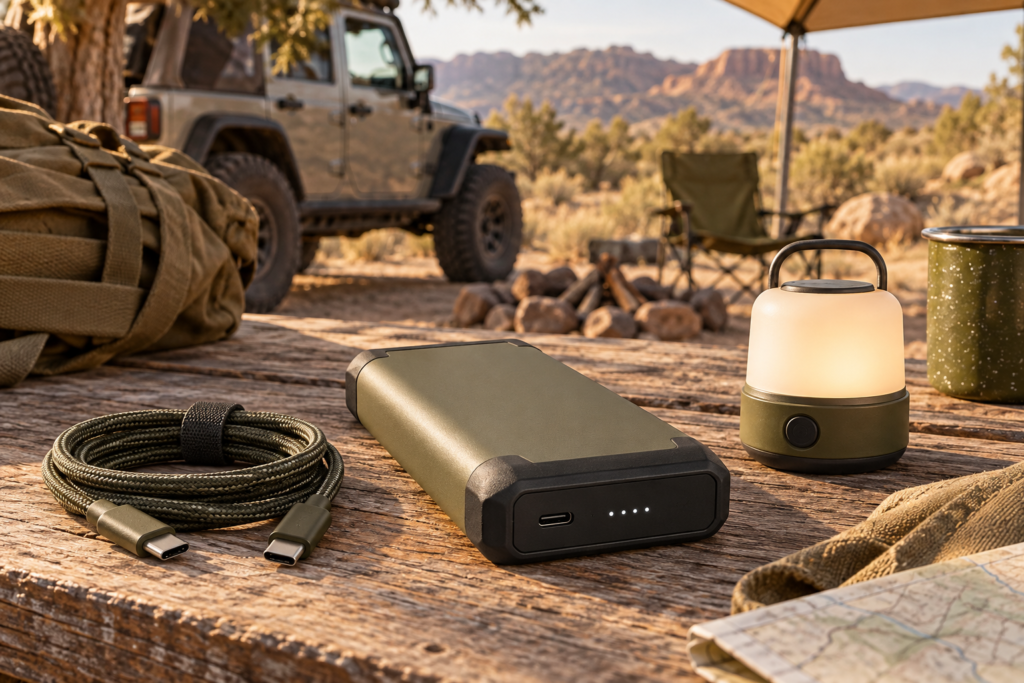
Also check the exact listing and package contents rather than assuming a wall charger is included. What matters is not just whether the bank arrives charged, but how you will restore its charge for the next day. If you plan to use a Jeep outlet, verify when that outlet is powered and avoid relying on the vehicle’s starting battery as an unplanned overnight supply.
When to leave it off the shopping list
Skip it for a simple drive with one phone if your existing vehicle charging setup already meets the need and you rarely leave the Jeep for long. More capacity is not automatically better when it adds something else to pack, recharge, and protect from heat.
Skip it as a substitute for vehicle or campsite power. The 737’s listed connections are USB ports. It is not the tool for starting a Jeep, running a tire compressor from a vehicle connection, or supplying an AC appliance. If you are planning a powered campsite with equipment that needs outlets, start with the loads and recharge plan in a weekend camp power plan instead.
Skip it as your sole preparedness purchase. A charged phone may still lack service; a bank may also be inaccessible if it is in the Jeep while you are away from it. The National Park Service recommends testing equipment before a trip and bringing navigation and communication tools suited to the setting. Fix gaps in your route plan, lighting, or ability to call for help before treating more USB capacity as the answer.
A useful pre-trip rehearsal
Before committing bag space to any power bank, pack the cables and devices you would actually take. Charge the bank from your intended source using USB-C1. Then, with the Jeep off, connect your priority device and confirm that it charges. Try the second device if sharing power is part of your plan. Finally, put the bank where it would ride at camp and decide whether you would really carry that weight when you walk away.
That rehearsal will not certify a particular number of charges or guarantee power in every condition. It will answer the more useful beginner question: does this bank solve a charging gap on my trip? The Anker 737 makes sense when portable USB power, multiple ports, and a workable recharge routine all matter. Otherwise, keep the kit simpler and spend your planning time on the parts of the trip that a battery cannot fix.