A Jeep makes it easy to bring spare power to camp, but that does not mean every light can use every battery in the cargo drawer. When you are setting a tent after sunset, checking a tire, or walking from the campsite to a restroom, the useful question is not just how bright your headlamp gets. It is what powers it tonight, what replaces that power tomorrow, and whether you can find the spare without unloading the Jeep.
As an Amazon Associate I earn from qualifying purchases. Some product links in this article are affiliate links.
The Black Diamond Spot 400 Headlamp is a useful example because its AAA-powered version offers two distinct routes: three AAA cells or Black Diamond’s optional BD 1500 rechargeable battery pack. That flexibility is the reason to consider it for a first 4×4 camp. It is not a promise that either route will last a particular number of nights.
First, identify which Spot you are buying
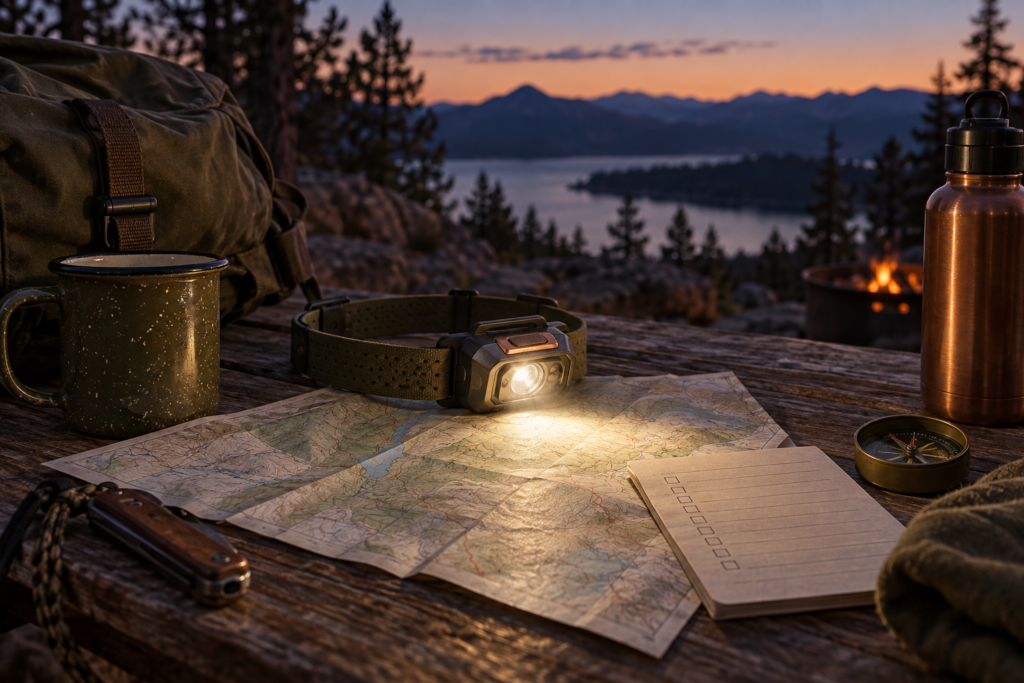
Verified product facts: The linked Amazon listing identifies the Graphite Spot 400 as the AAA-powered model. Black Diamond specifies three AAA batteries or its BD 1500 lithium-ion rechargeable pack, which is sold separately. Its instructions permit AAA alkaline or lithium batteries and warn against mixing old and new cells or different battery types. The lamp also has dimming, a battery indicator, red-light and lock modes.
Editorial judgment: Dual-fuel is valuable when your charging plan is still taking shape. It lets you start with replaceable cells and decide later whether a proprietary rechargeable pack fits your trips. Do not confuse this model with a Spot 400-R listing, or assume that buying a dual-fuel lamp includes the optional pack and a way to charge it.
Choose a primary battery plan
AAA alkaline: the straightforward first trip
For an occasional weekend, three fresh alkaline AAA cells and a separate, matched spare set make an uncomplicated plan. There is no charging schedule to remember on the drive out. You do, however, need to check the lamp before leaving and replace all three cells together when the set is spent. Keep spares together in a small case rather than loose among tools and camp utensils.
Cold changes the calculation. Energizer’s alkaline battery guidance explains that lower temperatures can reduce the performance available while a battery is cold. That does not establish how long the Spot 400 will run on a chilly night; settings, battery age and usage also matter. Treat the spare set as part of the plan, not as proof you can ignore the lamp until it goes dim.
AAA lithium: a replaceable-cell option for colder trips
Black Diamond’s instructions also allow AAA lithium cells. These are an alternative to alkaline when you want to keep the simple swap-in-the-field approach, especially if cold-weather battery performance is on your mind. Check that the package says AAA and use three matching, fresh cells. In this plan, AAA lithium means individual lithium batteries, not the BD 1500 rechargeable pack; the two options should not be treated as interchangeable charging systems.
Do not buy lithium AAA cells on the assumption of a specific Spot 400 runtime or a guaranteed cold-weather result. The available documentation establishes that the battery type is permitted, not how your brightness setting, temperature and use pattern will combine on a particular trip.
BD 1500: recharge when you have a real charging routine
The optional BD 1500 pack makes the most sense if you already have a dependable way to recharge accessories between camps or stops. It can reduce the routine of replacing disposable cells, but it adds another item to acquire, charge and keep track of. Confirm the appropriate charging equipment for the pack you buy; do not assume a cable or a Jeep power outlet can charge the headlamp directly.
A portable power station can be useful for a broader camp electrical plan, as discussed in a weekend camp power plan. It does not remove the need to identify the charger and connection your battery actually requires. If you often camp away from charging opportunities, carrying a complete spare AAA set preserves the Spot 400’s most practical advantage.
Use buying criteria that match the campsite
- Trip length: Plan for the evenings you expect to use the light, plus a spare set or a second light. Avoid turning a published maximum runtime into a weekend guarantee.
- Charging access: Decide whether you will recharge at home, during a drive, or not at all. If that answer is uncertain, replaceable AAA cells are easier to plan around.
- Conditions: Expect battery behavior to change in the cold. Check the lamp under the conditions you anticipate where practical, without assuming a bench specification predicts camp performance.
- Tasks: Use a modest setting for close work, such as sorting tent stakes or finding a zipper, and brighter light when you need to inspect farther away. A maximum-lumen figure alone cannot tell you how much usable light remains later.
- Backup: Decide where a second independent light lives. A spare battery set helps only if the headlamp itself works and you can reach the batteries in the dark.
Battery planning is separate from deciding how to light a whole campsite. If that is the decision in front of you, the existing two-light camp kit guide covers the lighting layout; this choice is about keeping the wearable light powered.
A practical predeparture routine
- Check that the listing and packaging name the AAA-powered Spot 400, then choose either three matching AAA cells or the compatible BD 1500 pack as your primary power source.
- Install the chosen battery, turn the lamp on, and practice selecting a low setting, red light and lock mode while you can still read the instructions.
- Put a matched spare AAA set and a second light where you can find them without emptying the Jeep. If relying on the BD 1500, verify your separate charging arrangement before departure.
- For packing and transport, follow Black Diamond’s instruction to remove the batteries. Check the lamp again when you set up camp, and use the lock mode when it is not in use.
Black Diamond advises checking the headlamp before use and carrying a second light with sufficient spare batteries for critical situations. That is a sound boundary for a 4×4 camp: a hands-free lamp is useful for routine jobs beside the Jeep, but it should not be the only way your group can see if a battery runs out or the lamp stops working. Choose the battery system you can maintain consistently, then make the backup easy to reach.