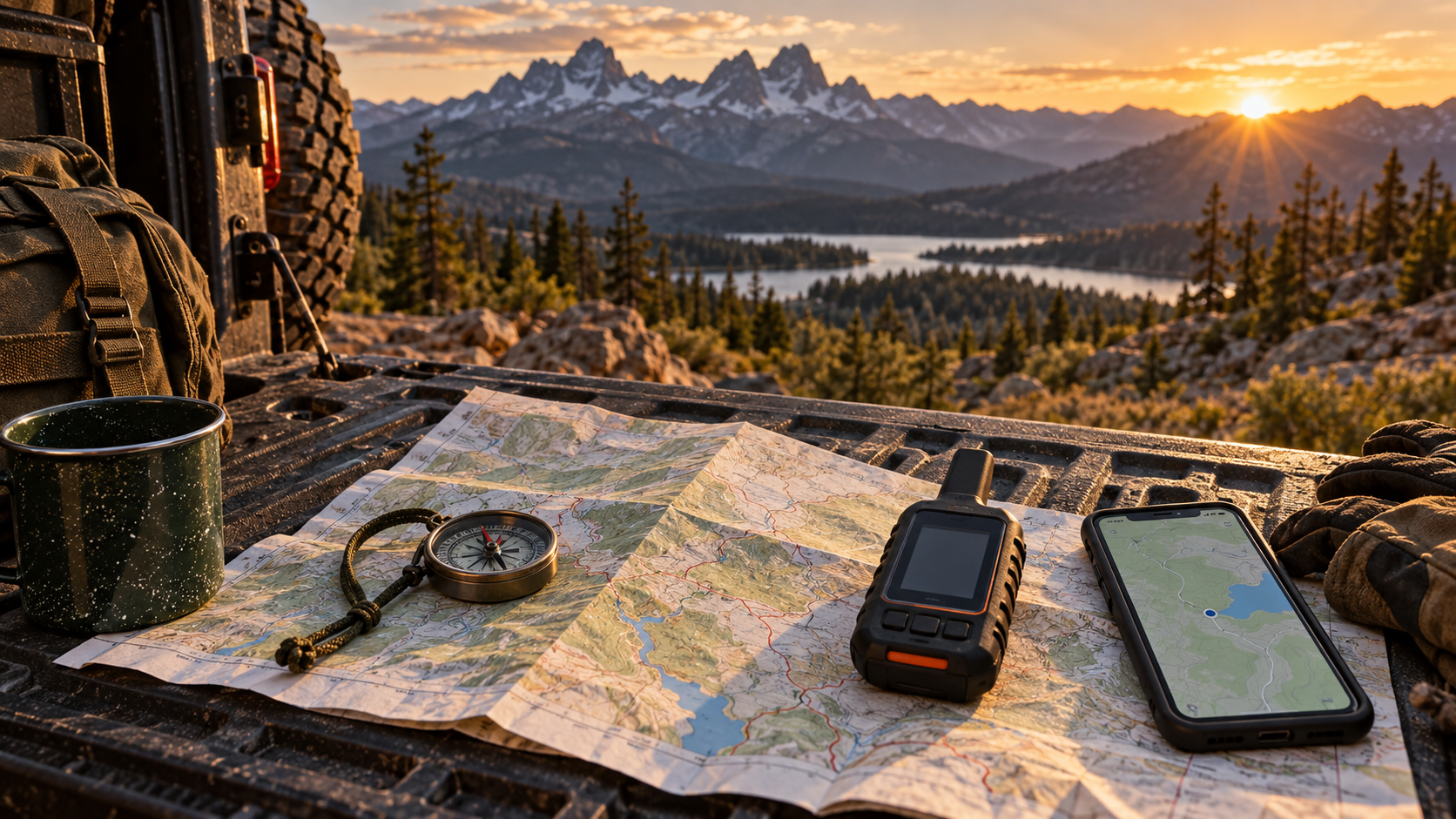
A 4×4 day trip can turn into an unplanned night without ever becoming an expedition. A disabled Jeep, an injury, or a closed return route matters more than the number of hours on your itinerary. But that does not make a satellite communicator an automatic first purchase for every dirt-road outing. The useful question is narrower: if you cannot drive out or get a cell signal, who can you reach, and what can they do with the information?
As an Amazon Associate I earn from qualifying purchases. Some product links in this article are affiliate links.
Judge the route, not the word “day”
Imagine two Saturday drives. One stays near traveled roads, has known cell coverage, and ends well before dark. The other follows a remote, rough route with one vehicle, uncertain coverage, and a long walk to a paved road. Both are day trips; they have different communication problems.
For remote backcountry roads, Joshua Tree National Park advises visitors to leave a detailed trip plan, carry supplies for a delayed rescue, and consider a satellite communication device because cell reception is very limited. It also recommends traveling with at least two 4WD vehicles on remote or rough roads. That is guidance for those conditions, not a rule that every beginner needs to buy a messenger before driving any unpaved road.
Before shopping, mark your route, turnaround point, likely exit, and expected return time. Give that plan to a trusted person who is not on the trip, including when they should seek help if you do not check in. The National Park Service’s trip-plan guidance treats that outside contact as part of the plan—not as something a device replaces.
When a communicator earns its place
A satellite communicator becomes easier to justify when a foreseeable delay would leave you without a practical way to tell someone what happened. Consider one for a solo vehicle on a remote route with unreliable cell service, a drive where another vehicle is unlikely to pass, or a trip with passengers whose needs make an extended wait harder to manage. An early start does not eliminate those possibilities.
It is especially useful if a short, two-way update could change the response. “We have a flat, are staying with the Jeep, and expect to be late” is different from an emergency request. A trusted contact can receive the update and avoid assuming you are missing; if circumstances worsen, you can communicate new information. Those are reasons to value messaging, not promises that a message will send immediately.
Think about who is already in your group. A radio can help vehicles talk to one another, but it does not by itself reach your contact at home. A second capable vehicle may help with a mechanical problem, yet it does not remove the need for a route and overdue plan. If you are organizing several Jeeps, build the within-group side separately with a group-radio plan.
When to hold off
If your first trips are short, well-traveled routes with reliable communication, an established check-in contact, and straightforward access to help, buy the essentials for the drive before adding a subscription device. Work out your route, weather decision, fuel margin, spare-tire readiness, water, and what you will do if you must turn around. A communicator cannot repair a tire or make a road passable.
Hold off, too, if you have not identified the person who will receive ordinary updates. “I can send messages” is not much of a plan if nobody knows your route, expected return, or when to act. The decision may change as your trips move farther from other people and dependable service. Not yet is a reasonable answer; it is not a commitment to go without one on every future trip.
Why the inReach Mini 2 is relevant
The saved Garmin inReach Mini 2 is a concrete example of what you are deciding whether to carry. Garmin documents two-way text messaging over the Iridium satellite network, check-in messages with predefined text and recipients, and an SOS function that contacts Garmin Response. You can use the device’s controls for messages, while pairing it with the Garmin Messenger app lets you compose messages on a phone.
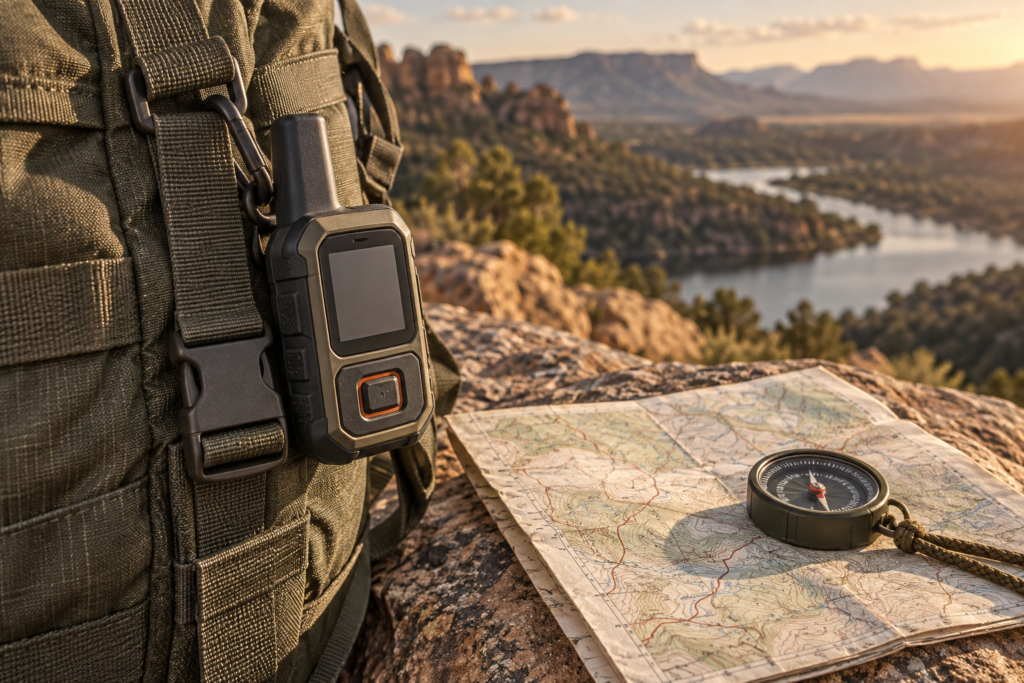
That combination fits a day-trip communication plan: a routine check-in, a specific non-emergency delay message, and an emergency option are distinct actions. Garmin requires an active satellite subscription for messaging, tracking, weather and SOS. A device with suspended service is not a dormant satellite emergency backup. Garmin also says the Mini 2 needs a clear view of the sky to transmit messages and track points. Do not assume it will communicate reliably while buried in Jeep cargo or beneath obstructing terrain.
Use SOS for a real emergency, not as a substitute for ordinary roadside coordination. Garmin says its response team can communicate with the user and notify appropriate responders; that does not establish how quickly help can arrive at your route. For a broader look at the device’s role alongside other methods, see where the Mini 2 fits in an overland communication plan.
Three checks before you pay for one
- Route exposure: Where will your phone stop being dependable, how remote is the turnaround, and how likely is another vehicle to pass? Research the actual route rather than assuming a coverage map settles what will happen on the trail.
- Service commitment: Are you willing to activate and maintain a Garmin subscription for the trips on which you expect satellite features? Check current plan terms and any messaging or tracking limits before choosing a plan. If you suspend service between trips, verify that it is active again before departure.
- Communication job: Do you need two-way updates to a contact, emergency signaling, or conversation within a convoy? Those are not identical needs. Choose the tool for the gap you actually have, rather than treating one purchase as the whole safety plan.
If those questions point to occasional remote trips, you can also consider arranging access to a suitable communicator for those trips instead of assuming ownership is necessary. Whatever device you use, confirm its service status and learn its controls before depending on it outdoors.
Make the first trail day a practice run
Activate the Mini 2 before leaving home, sync your contact information and check-in setup, and charge it. Garmin instructs owners to test the device outdoors before a trip; its test procedure sends a message and waits for confirmation. Do that in an open area, not for the first time after the Jeep is stuck. Agree with your contact on what a check-in means, what time you expect to return, and what they should do if you are overdue and unreachable.
Carry the device where you can retrieve it if you leave the vehicle, while planning to give it a clear view of the sky when communicating. Keep your map and vehicle plan separate. If the route or weather exceeds your ability to drive out safely, turn around; a working messenger is not a reason to press on.
Bottom line: For a beginner’s accessible trail day, a trip plan and basic vehicle preparation may be the better next steps. For a remote day drive where a breakdown or injury could leave you out of cell range and unable to reach anyone, an active, tested satellite communicator can address a real communication gap. Buy for that gap—not for the length of the trip.