
As an Amazon Associate I earn from qualifying purchases. Product links in this story may earn Rústiko a commission, at no extra cost to you.
Identify the exact C300
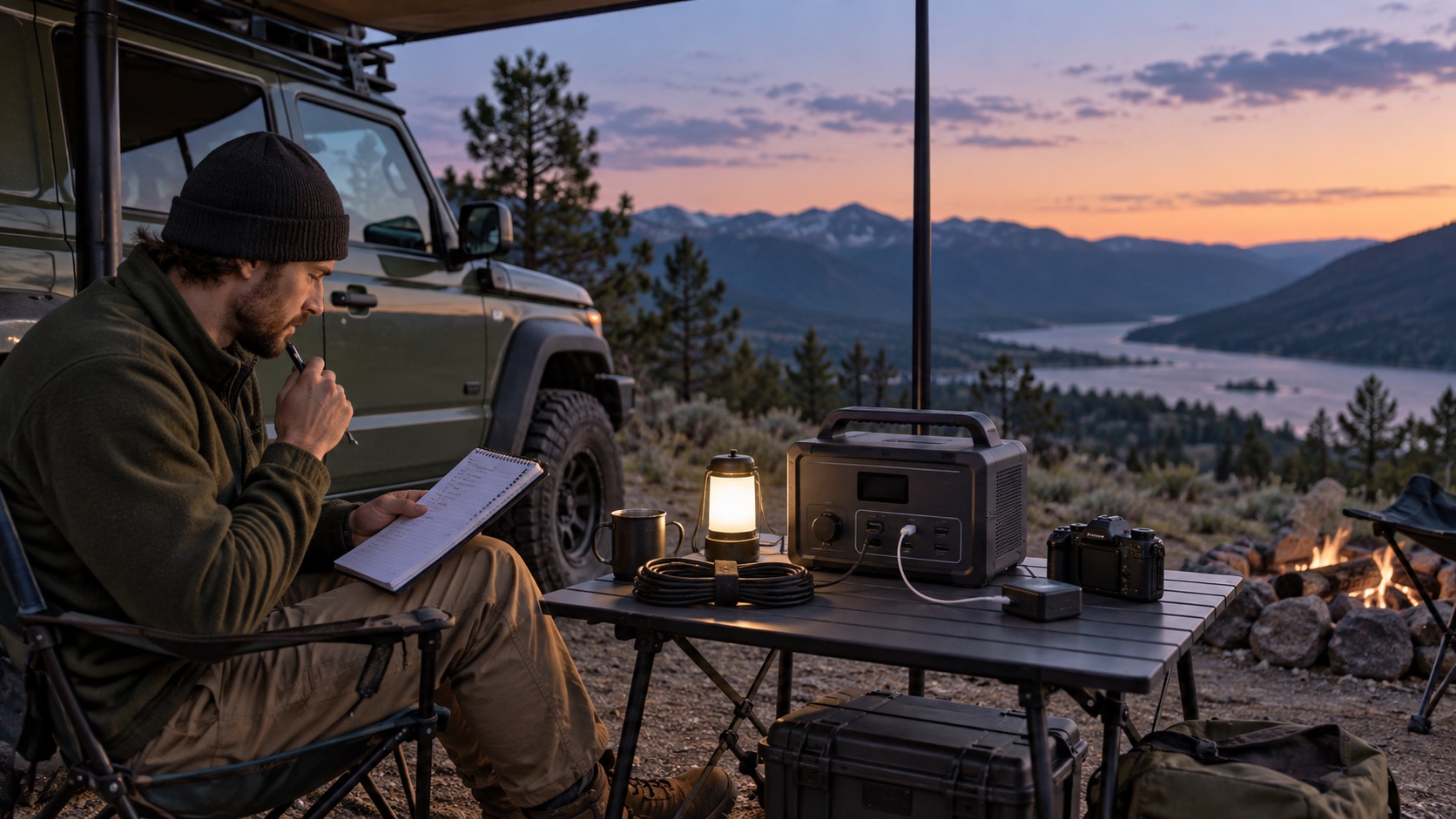
The Anker SOLIX C300 AC portable power station is the AC version in our catalog. Anker lists 288Wh battery capacity and 300W rated AC output. The C300 DC is a separate model with different ports, so check the full listing before ordering. Write a load list for every device you intend to charge and add a margin for conversion losses and unexpected use.
Separate essential and optional loads
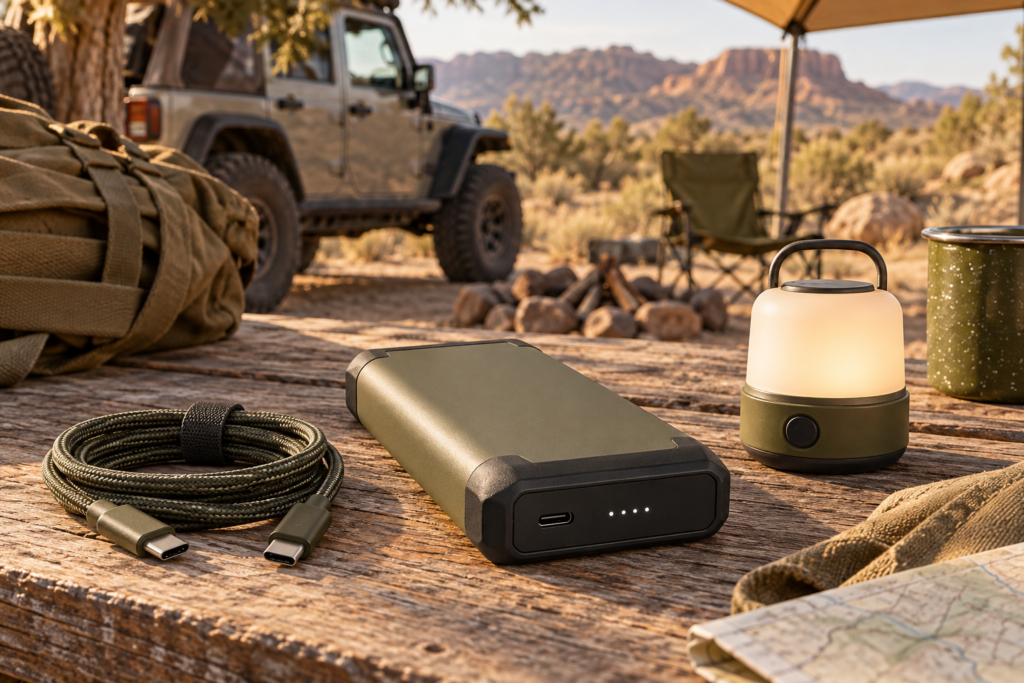
A Anker 737 power bank may be a better dedicated reserve for a phone or camera if its outputs match the device. The C300 can serve shared camp charging, but essential navigation and communication should not depend on one battery alone. A BigBlue 28W portable solar charger is a small panel for compatible USB devices, not an assumed fast way to refill a 288Wh station; check electrical compatibility before connecting any solar panel to the C300.
Rehearse the weekend
Charge the station fully, run the actual camera, light and phone loads for a realistic evening, then record the remaining battery. Check storage temperature and where the unit can stay dry and ventilated. Keep cables off walking paths and never place a power station next to a stove. Our three-station comparison shows when a bigger battery may be justified, and the Jackery deal guide offers a price-check framework. Buy from a measured load, not a dramatic campsite photo.