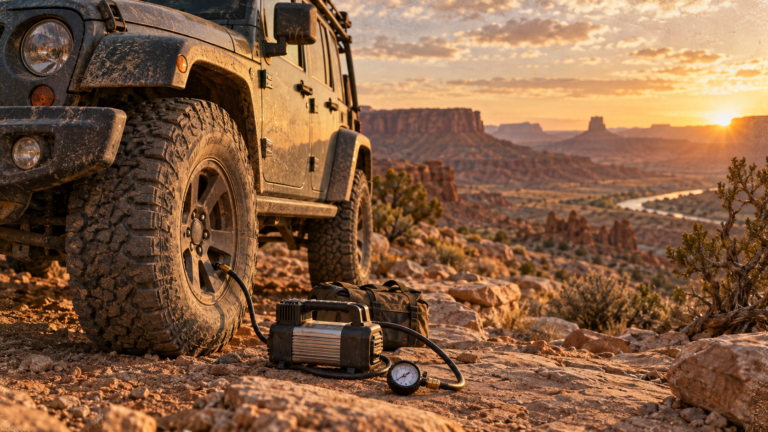
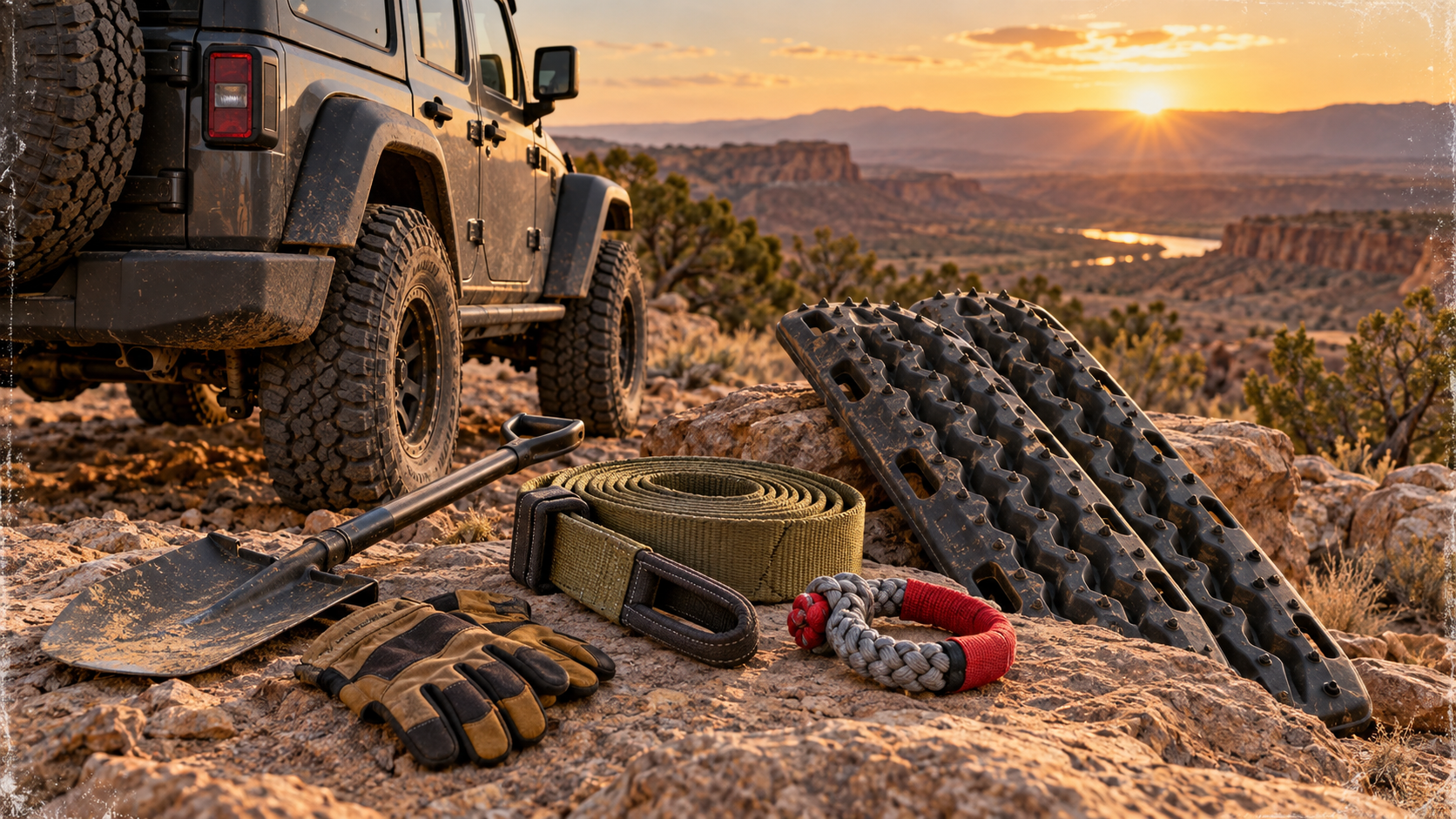
Recovery bundles are easy to compare by the number of items in the bag. That count can be misleading. A kit may include several straps and shackles while omitting the instructions, rated attachment information, or training needed to use them. A discount matters only after you know what problem the kit is meant to solve on the routes you actually drive.
As an Amazon Associate I earn from qualifying purchases. Some product links in this article are affiliate links.
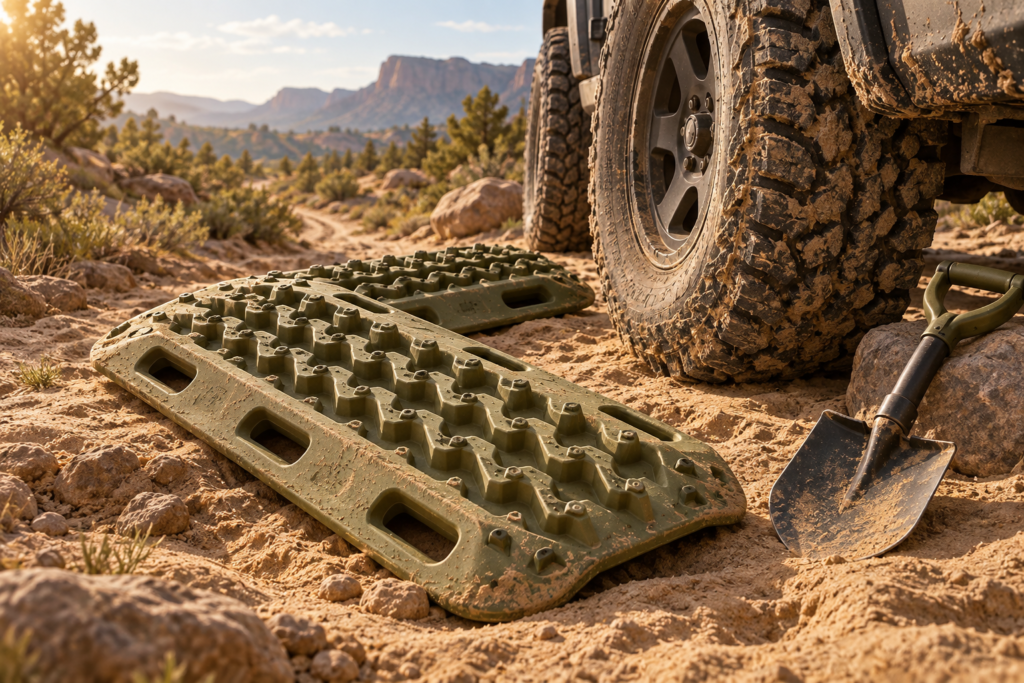
A bundle is not automatically the right first purchase. For soft-ground traction, MAXTRAX MKII recovery boards offer a separate product type to compare with a rope-and-shackle kit; neither replaces route judgment, vehicle-approved recovery points or training.
Start with a recovery plan
Think through the terrain, vehicle, group, and ways to turn around before shopping. The Joshua Tree National Park backcountry-road guidance expects a spare tire and self-rescue equipment for remote roads, and it recommends traveling with another 4WD vehicle in rough, remote areas. That advice describes a demanding location; it is not a universal shopping list for every local gravel road.
A recovery plan should identify who can help, what equipment the vehicles have, how the group will communicate, and when to stop and request professional help. A bundle cannot replace the judgment or training behind those decisions.
Identify every component
Open the seller's itemized contents. Record the exact brand and model of each piece, its stated rating, and whether the necessary instructions are included. Compare those details against the equipment manufacturer's documentation. WARN, for example, publishes model-specific operator literature for its winches; the exact manual matters more than a generic diagram in a listing.
Do not assume a strap, shackle, hook, or recovery point is appropriate because it fits physically. Components have different intended uses and limits. The vehicle's own recovery-point guidance also matters. If the seller cannot identify the parts clearly enough for you to check them, the kit is not ready for a safe buying decision.
Price the usable kit, not the big bag
The FTC recommends comparing product identifiers and total delivered cost, including fees. With a bundle, compare only the components you would actually use and can verify. Cheap extras do not add value if they are unsuitable, redundant, or undocumented. Check whether a case, gloves, and instructions are included, then compare an equivalent list elsewhere.
Sale items may have different return conditions. Check the window, return-shipping responsibility, and any restocking fee before ordering. If you later discover a part is wrong for your vehicle, that policy affects the real cost of the purchase.
Choose training before complexity
Tread Lightly! emphasizes responsible travel on designated routes and slowing down to assess obstacles. Those choices reduce the need to recover a vehicle in the first place. For a beginner, a guided outing or instruction can reveal which equipment is genuinely missing from the group's setup.
This is a deal-evaluation guide, not a current sale announcement or a recovery tutorial. Rústiko should publish a specific bundle offer only after an editor checks the live merchant listing, exact components, ratings, compatibility claims, and price on the day of publication.