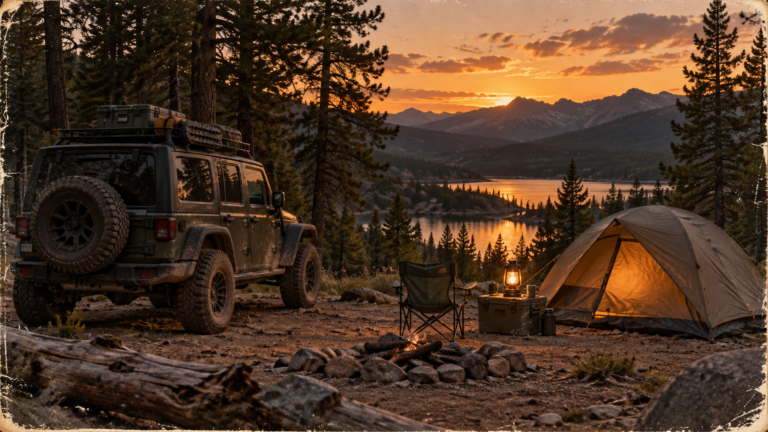
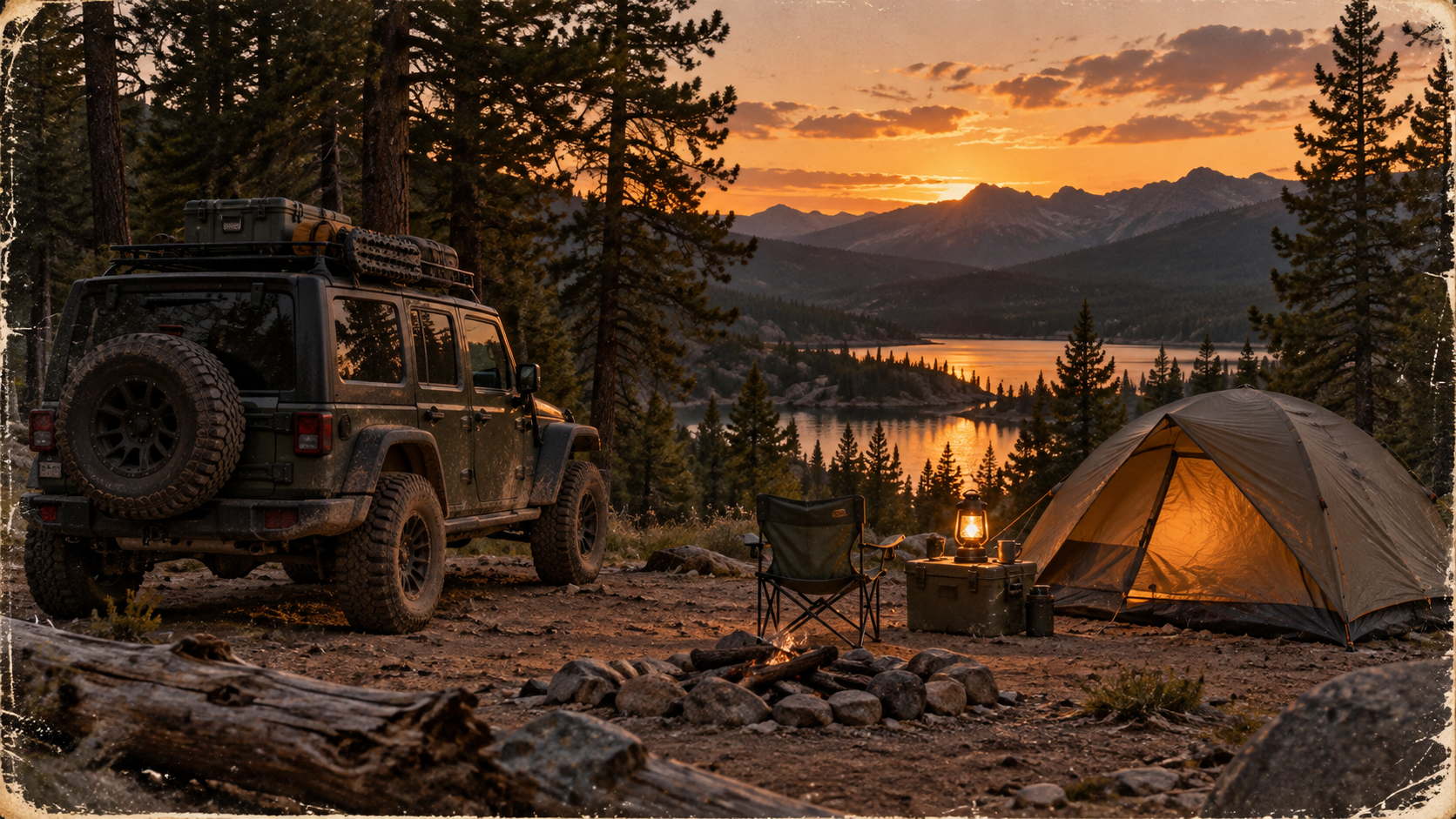
Your first night beside a 4×4 does not need to look like an expedition. A legal campsite, a shelter you know how to pitch, food you can store properly, and a plan to get home matter more than an elaborate collection of vehicle accessories. Build the setup around one real destination and the people who will be there.
As an Amazon Associate I earn from qualifying purchases. Some product links in this article are affiliate links.
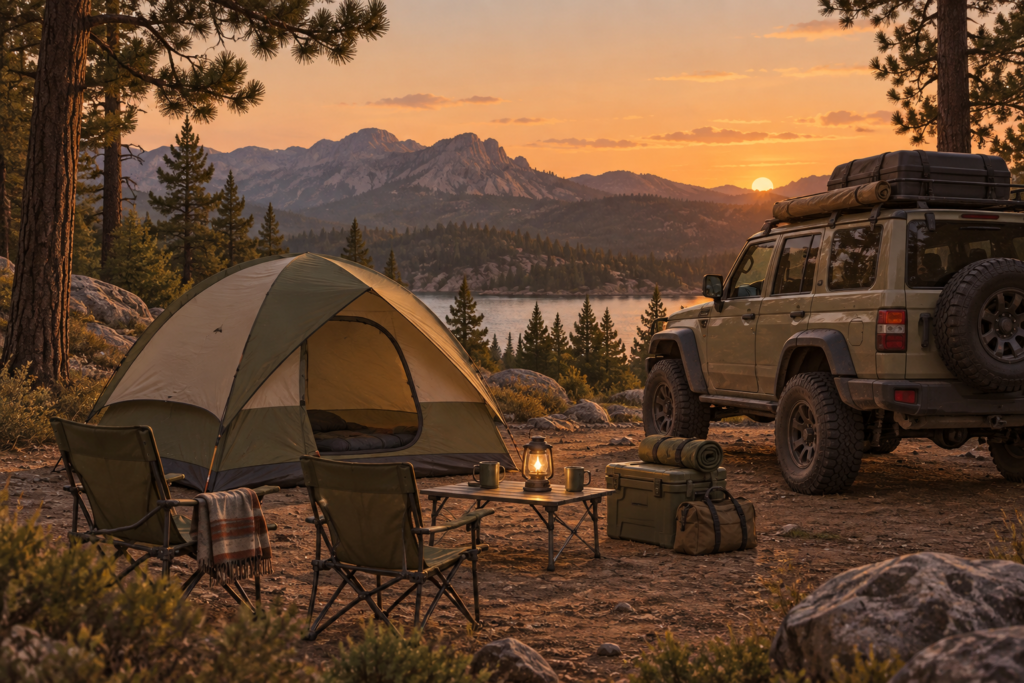
A simple ground shelter such as the Coleman Sundome ground tent is one option to compare with your group size, weather and campsite rules. Pair that decision with a hands-free light such as the Black Diamond Spot 400 headlamp; practice pitching the tent and using the light before the trip.
Choose the site before buying gear
Check the land manager's page for the exact campground or dispersed-camping area. Look for road access, reservations or permits, fire rules, food-storage requirements, and available facilities. The National Park Service advises matching the site and season to the group's abilities and equipment. A campground with water and toilets calls for a different packing plan than a remote area with no services.
Do not assume that a spot beside a forest road permits overnight parking. Rules vary by forest, district and season. The Forest Service also advises contacting the local district about current conditions and closures. Save the site information before leaving home, especially if service may disappear on the drive in.
Keep the sleep setup modest
For one night, start with a tent or other shelter that fits the people and the conditions, a sleeping system suited to the forecast, and clothing for a colder or wetter evening than expected. A two-person tent label may not mean comfortable room for two people plus all their gear. Measure the actual usable space and test the arrangement at home.
Pitch the shelter once before the trip. Check stakes, poles, rain protection and the ground surface it needs. The NPS recommends testing equipment rather than discovering a missing component at camp. Keep an emergency shelter and a usable light accessible even after the main setup is packed away.
Plan food and light as separate jobs
Choose meals you can prepare with the equipment you already understand. Confirm that any stove and fuel are permitted under current fire restrictions. Check food and trash storage rules for that site; wildlife precautions are location-specific. Pack enough water for the group and a delay, then identify whether the site has a reliable water source or whether you must bring all of it.
Carry a headlamp for hands-free work after dark and spare batteries or a tested charging option. A phone flashlight can help locate something inside the vehicle, but it is a poor sole source of camp light when that same phone holds your map and check-in plan. Put the lighting where you can find it before sunset.
Make the vehicle part of the plan
Load the Jeep or other 4×4 so you can reach shelter, water and warm layers without emptying the entire cargo area. Check the tires, spare and fuel for the road you will actually drive. Avoid a remote campsite on your first overnight if the access road, weather, or group experience is uncertain. The easier site often makes the better test of your packing system.
Leave the route and expected return time with someone at home. Download the map, keep a paper backup where practical, and set a clear reason to turn around. On the next trip, improve the items that genuinely caused trouble. That experience is a better shopping guide than copying a fully built rig.