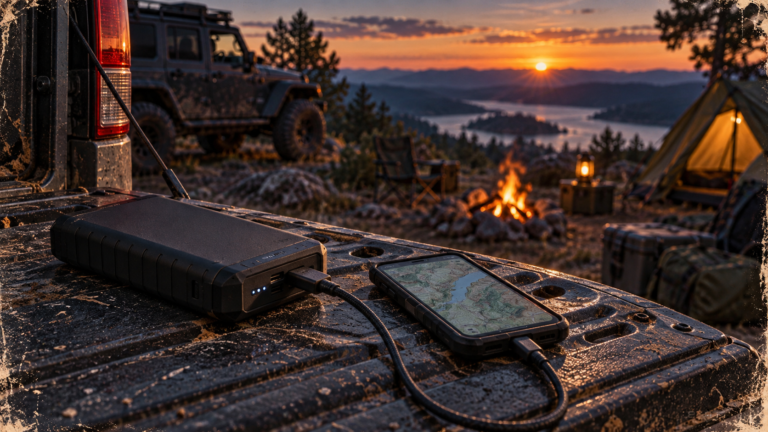
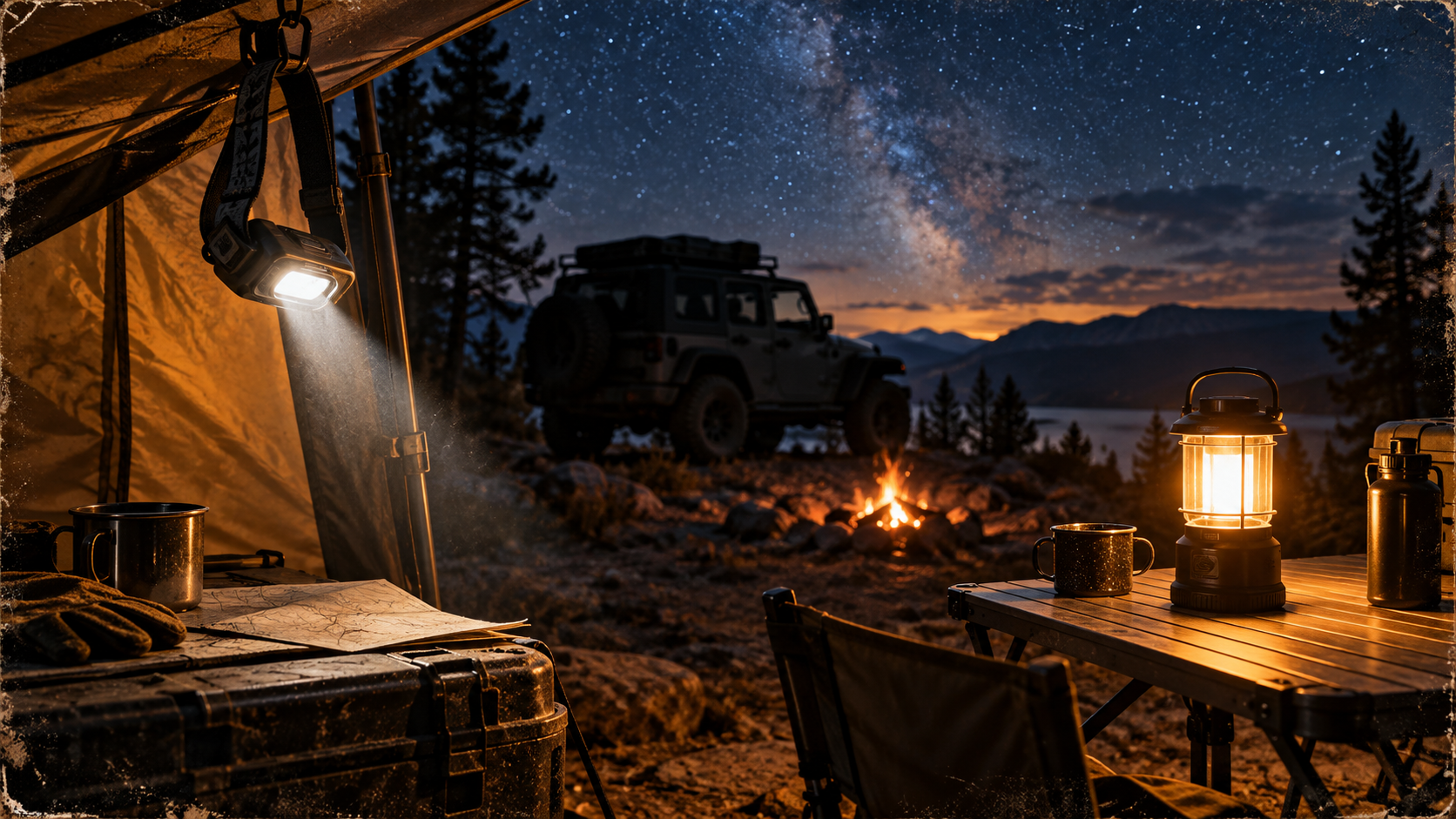
Camp lighting looks simple until you arrive after sunset with both hands occupied. A headlamp follows you to the vehicle, the tent and a trail. A lantern lights a shared space. For a first 4×4 overnight, the useful question is which task must still work if the other light or a phone battery fails.
As an Amazon Associate I earn from qualifying purchases. Some product links in this article are affiliate links.
The Black Diamond Spot 400 headlamp is a concrete example of a hands-free light to compare with a shared lantern. Check the battery option and run it through your actual camp tasks before relying on its stated specifications.
Start with moving safely after dark
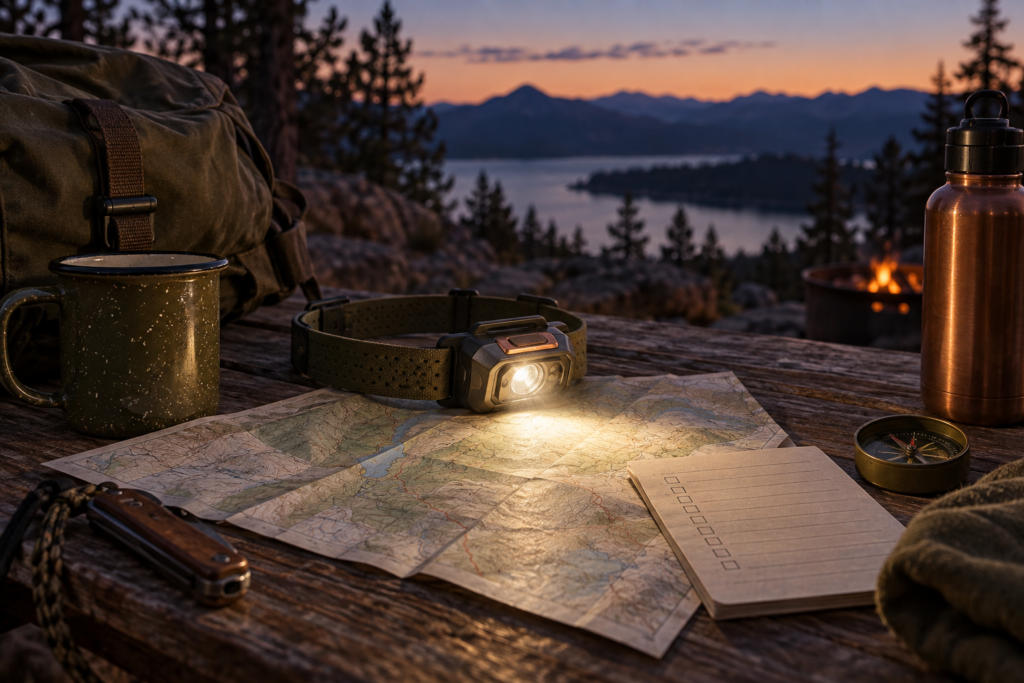
The National Park Service lists illumination among its Ten Essentials and specifically recommends headlamps for hands-free use. That makes a headlamp a practical first light: it can help you find a stake, inspect a tire or walk to a facility while carrying equipment. Keep it accessible before camp setup, not buried in a box you planned to unload later.
Choose a light you can operate without learning a complicated button sequence in the dark. Test its controls at home and carry the battery or charging method it requires. A printed runtime claim is not a substitute for checking that your actual unit works after storage.
Use a lantern for the shared camp area
A lantern can spread light over a table or shelter area so several people can work without aiming individual beams at one another. Think about where it will stand or hang, whether the light reaches the cooking and packing areas, and whether it can be kept away from weather. That is a different job from finding your way across an unfamiliar campsite.
For a simple first trip, a headlamp for each person who needs to move independently may be more useful than one large lantern. A small lantern can be added once you know how your group spends its evenings. Do not make the phone flashlight the only backup if the same phone holds your map and trip information.
Treat power and fuel as part of the choice
Check whether the exact light uses replaceable cells or a rechargeable battery, then pack the corresponding backup. The NPS advises extra batteries and testing camping equipment before a trip. If a lantern uses fuel or produces combustion gases, read its instructions and follow the campsite's fire rules; never use charcoal in an enclosed tent or vehicle. National Park Service camping guidance warns about carbon monoxide from combustion in closed spaces.
Simple battery-powered lighting avoids fuel logistics, but it still needs a working charger or spare cells. Test the whole charging chain with the device you will bring. Put a backup light where you can find it if the main one fails.
Compare a product against your tasks
When shopping, compare the exact model's controls, power source, mounting options and maker-stated operating limits. The Federal Trade Commission recommends checking the model number, total delivered price and return terms rather than relying on a headline offer. Avoid buying a bundle because it includes many lights if none addresses the tasks you listed.
Pack the headlamp first, practice using it, and add a lantern when the camp routine shows a clear shared-light need. The most useful gadget is the one that works when your hands are full and the sun is already down.