A phone, headlamp, camera and communication device can all be useful on an overnight 4×4 trip. They do not all deserve the same power priority. The map and the ability to call for help should remain usable even if recreational devices run flat. Start with the jobs that depend on electricity, then size the charging plan around a real trip rather than a large battery's marketing label.
As an Amazon Associate I earn from qualifying purchases. Some product links in this article are affiliate links.
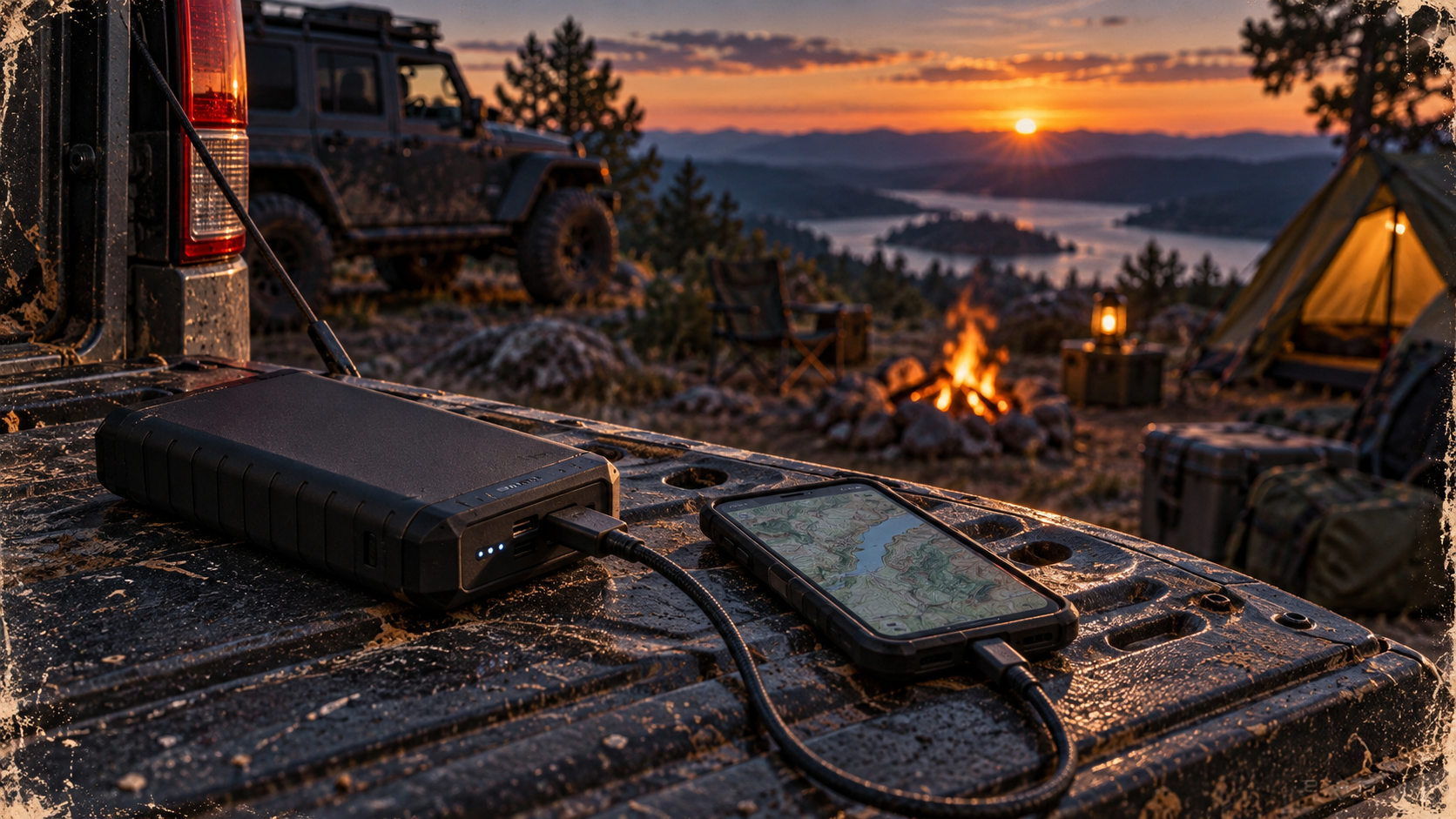
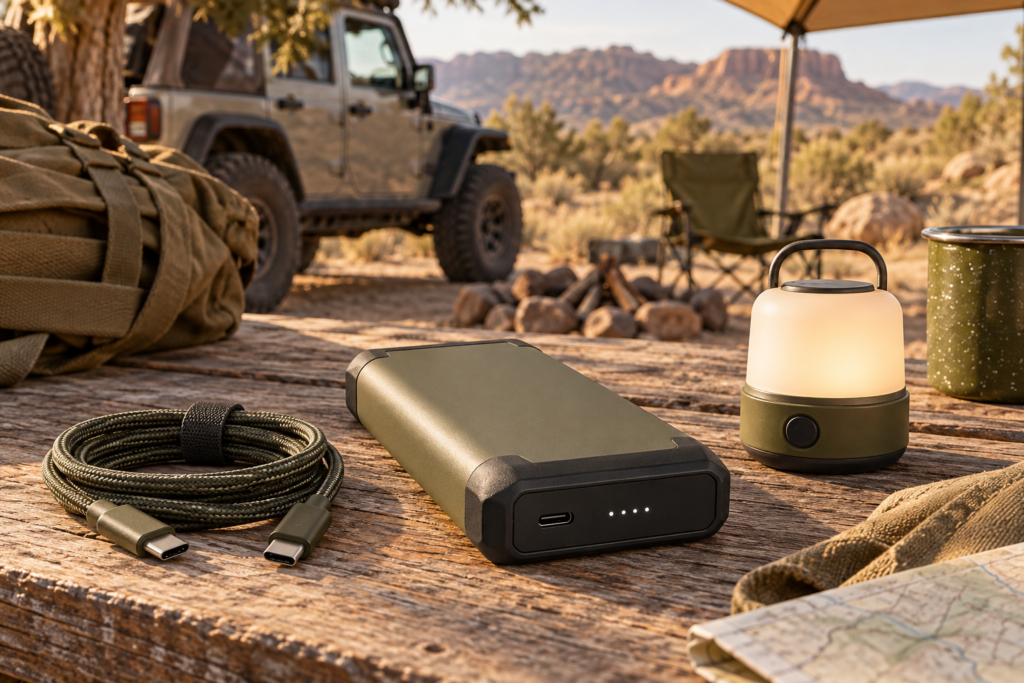
A separate power bank such as the Anker 737 power bank can keep a phone or other compatible device charged while camp accessories wait. Match its ports and cables to your essential devices, then test the full charging path at home.
Put essential devices first
Make a short list of the electronics you will bring. Mark which ones support navigation, lighting and communication, and which ones are optional. The National Park Service includes navigation, illumination and extra batteries among its Ten Essentials. It also recommends a physical map backup. That is a useful reminder that the power plan should reduce a point of failure, not make every task depend on one phone.
Download maps before departure and open them without cellular service. Charge the phone, headlamp and any communication device fully at home. Bring the correct cables and test them with the actual devices. A cable that fits a port but does not deliver the required charge is a problem you want to discover at home.
Estimate use in plain language
Write down how long the trip lasts, how often you expect to use each device, and whether the vehicle will be driven between uses. Note the manufacturer's stated battery capacity and charging method for each exact model. Those published figures are starting points, not a promise of runtime in cold weather, under heavy screen use or with an aging battery.
For a short trip, a charged phone and a suitable backup battery may be enough for the core electronics. A larger portable power station makes sense only if the device list, expected use and recharging opportunities justify it. Before buying, test the lighter setup during a local outing. That trial will show whether you are short on power or simply need to reduce screen time.
Build independent backups
Use a dedicated headlamp instead of relying solely on the phone's light. Keep spare batteries or a separate charging path where the device permits them. Carry a paper map and know how to use it if the screen fails. The NPS trip-planning guide treats offline maps and a physical backup as complementary tools, not interchangeable guarantees.
Cellular coverage may be limited on remote roads; Joshua Tree National Park warns about that on its backcountry routes. Extra battery capacity does not create signal. If the destination truly requires a satellite device, evaluate its coverage, subscription, operating instructions and the group's response plan before relying on it.
Test the full chain before departure
Charge every device, connect every cable, and confirm the backup battery can charge the device that matters most. Practice finding the map in airplane mode and locating the headlamp in the dark. Leave a route and return time with someone outside the group. If the power plan fails a home test, simplify the trip or fix the missing connection before traveling.
Adventure electronics earn their cargo space by solving a known job. A small, tested combination with independent backups is a stronger start than buying a larger battery without knowing what it must support.