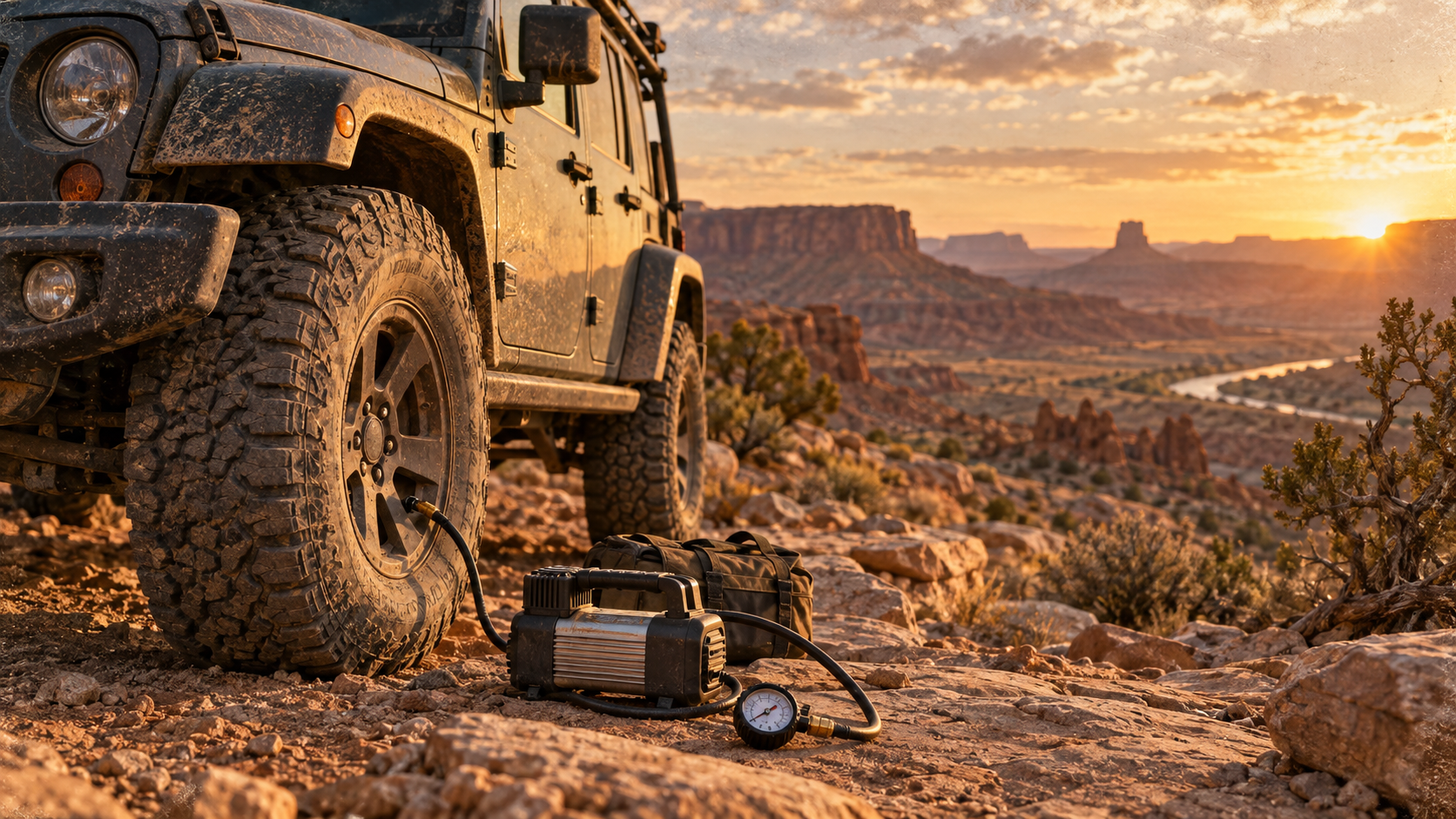
A large percentage-off label can make a portable compressor look like an easy trail upgrade. Before buying, make sure the offer is for the compressor you actually need. A different variant, a smaller tire rating, a short hose, or the wrong power connection can erase the value of a lower price. The headline discount is the last thing to judge, not the first.
As an Amazon Associate I earn from qualifying purchases. Some product links in this article are affiliate links.
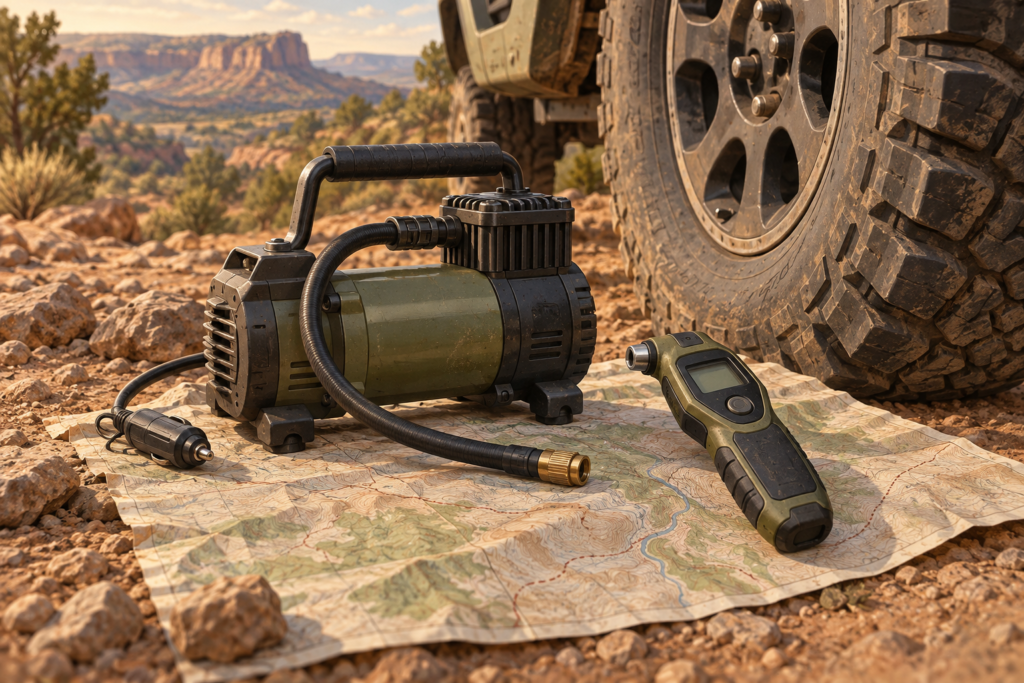
Use the VIAIR 88P portable compressor as a real listing to check rather than judging a discount label alone. Compare the exact model, tire-size guidance, battery-clamp connection, duty cycle and seller terms before deciding whether the current offer fits your Jeep.
Match the exact model
Write down the manufacturer, model, part number, and the specifications that matter for your Jeep. The analog VIAIR 88P is identified by part number 00088 on the manufacturer's page, with battery-clamp power and a stated tire-size rating. A listing that says only “88P” deserves a closer look because product families and digital variants can share familiar names.
Compare the offer's photos, package contents, and model code against the manufacturer's own documentation. Do not substitute a seller's headline maximum PSI for a tire-size rating, duty cycle, or electrical requirement. If the listing leaves those details unclear, the honest answer is that you cannot verify the deal yet.
Compare the whole cost
The Federal Trade Commission advises shoppers to compare exact model details and include shipping, handling, and other charges in the total. A low item price can be offset by delivery cost, a missing accessory, or a return fee. Put comparable offers side by side using the same model and contents rather than comparing a kit to a bare compressor.
Check when the offer ends and whether the seller's “regular price” represents a useful comparison. A percentage against an inflated reference price does not tell you whether another seller has a better total. Do not write a fixed price into a long-lived article unless someone is assigned to verify it again before publication.
Read the return terms before clicking
Sale and clearance items may have different return terms. The FTC recommends checking the return window, shipping responsibility, and restocking fees. Those details matter more when you cannot test fit, hose reach, or the electrical connection until the box arrives. Save the listing and order details so you can establish what was promised.
Look at the seller as carefully as the price. If the merchant, warranty route, or exact item condition is unclear, that uncertainty is part of the deal. A refurbished or open-box unit may still make sense, but it should be compared as such, not as though it were identical to a new package.
Decide from the trip backward
A compressor is useful only if it supports your tire-pressure plan. Know the tires on your Jeep, the road-pressure guidance for your setup, and whether you will actually air down on the routes you use. Then compare the model's published limits with the task. A discount on an unsuitable unit is still money spent on the wrong solution.
This article is a checklist, not a live sale alert. When Rústiko presents a specific offer, the editor should verify its current price, merchant, product code, availability, and return terms immediately before publishing.