A first trail day can turn into an expensive shopping list before you have even picked a route. Our starting point is simpler: choose a trip that suits your vehicle, prepare for the problems that could stop you getting home, and learn what your Jeep actually needs before modifying it.
As an Amazon Associate I earn from qualifying purchases. Some product links in this article are affiliate links.
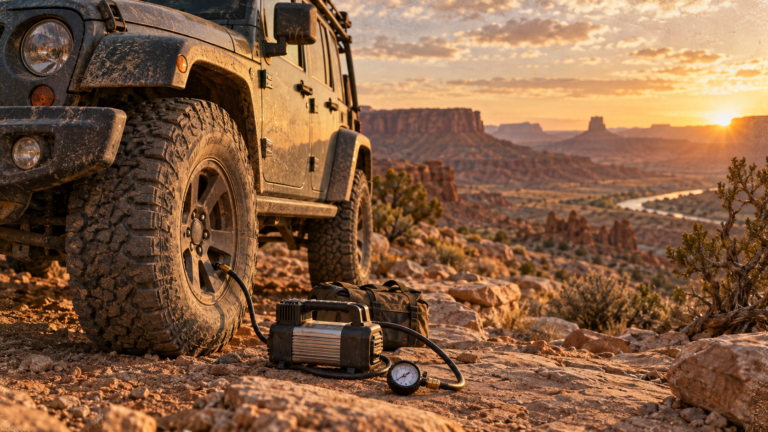
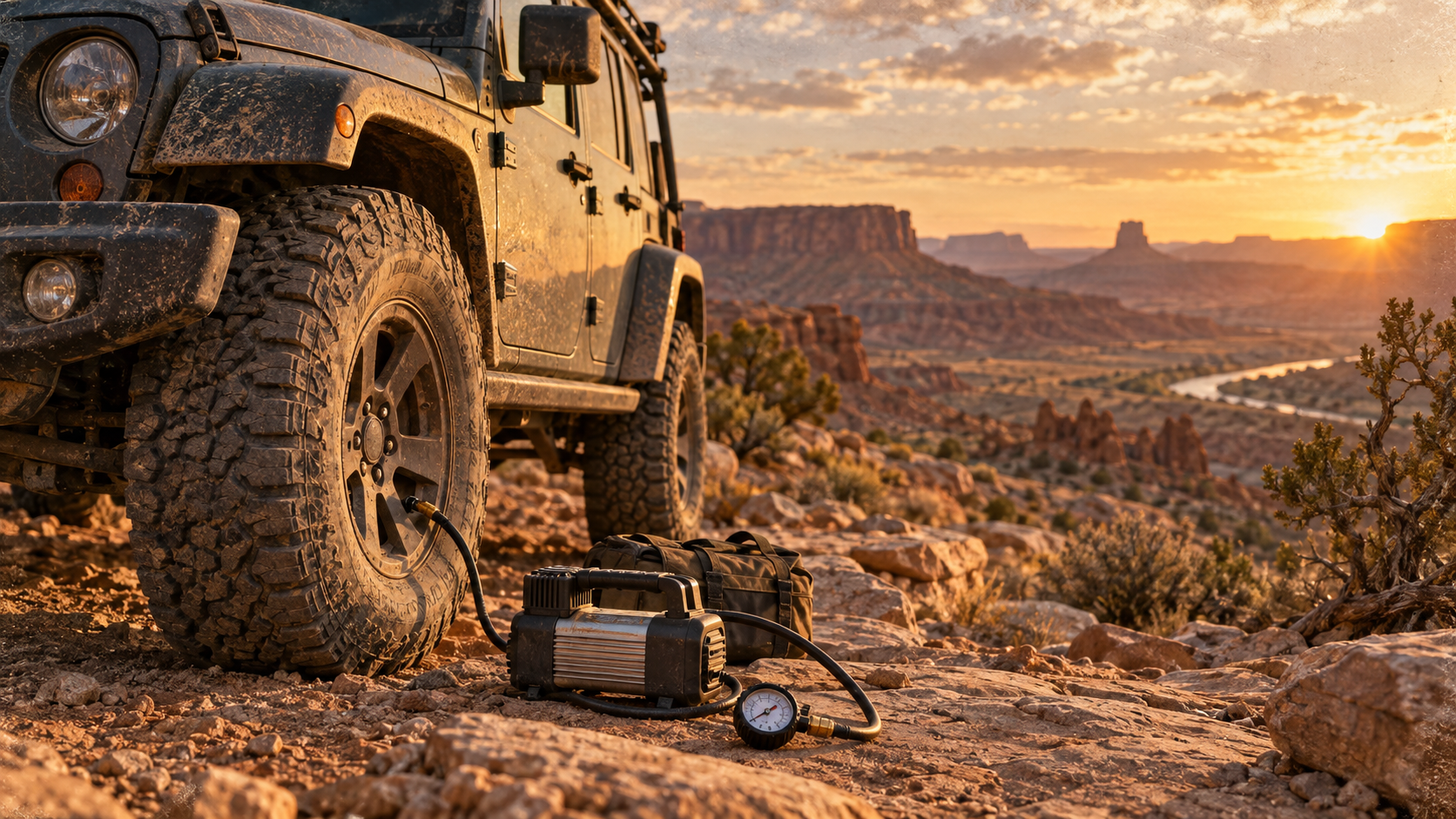
A dependable tire-pressure routine is more useful than a pile of accessories: compare a dedicated AstroAI digital tire-pressure gauge for checking cold pressure and a VIAIR 88P portable compressor for airing back up after an approved trail. Confirm each tool suits your tire size and vehicle before relying on it.
This checklist is for a beginner planning a day trip on designated roads or trails. It is not a preparation plan for technical rock crawling, deep-water crossings or a remote expedition. Route conditions and your exact vehicle configuration decide what belongs in the rig.
The short version
Start with a suitable route, sound tires, a way to check and restore tire pressure, a recovery plan and supplies for an unexpected delay. Put training ahead of accessories. Buy equipment to solve a specific problem on the trips you actually take.
Research note: this is a source-based preparation guide, not a hands-on product test. The VIAIR example below refers to the analog 88P, part number 00088.
As an Amazon Associate I earn from qualifying purchases.
1. A route that fits your experience
Pick the route before picking the upgrades. Check current access, closures, weather and permit requirements with the land manager. Have an easier alternative and agree on a turnaround point. Tread Lightly!’s four-wheeling guidance emphasizes designated routes and preparation before departure.
For a first outing, a manageable day with time to look around is a better target than finishing someone else’s hardest trail. An expensive suspension cannot make an unsuitable itinerary a good decision.
2. Familiarity with your Jeep—and an experienced companion
Read the sections of your exact owner’s manual covering four-wheel-drive operation and vehicle limitations. Take a practical course and arrange to travel with experienced drivers. Tread Lightly! recommends skills training and traveling with at least one other vehicle. Read its preparation guidance.
Our priority would be learning what the factory controls do before adding equipment that creates more decisions. The useful question after a first trip is what limited you, rather than what looked impressive in the parking lot.
3. A vehicle inspection before the trailhead
Resolve known mechanical problems before leaving. Check the vehicle’s maintenance requirements, tires and visible damage, and make sure the equipment you intend to carry is appropriate to the route. Tread Lightly! includes mechanical readiness in its pre-trip advice. See its vehicle-preparation tips.
We would spend the first preparation budget on putting an existing vehicle right. A new accessory rarely fixes the reason a neglected vehicle is unreliable.
4. A tire-pressure gauge you can read
Carry a gauge and know the recommended pressure for your setup. NHTSA’s tire guidance directs drivers to the vehicle placard or owner’s manual for the recommended cold pressure—not the maximum marked on the tire—and includes checking the spare.
This guide does not prescribe a universal trail pressure. Tires, wheels, load and terrain differ. Get guidance appropriate to your configuration and restore the appropriate road pressure before returning to pavement. Modified tire setups need advice specific to those changes.
5. A suitable way to put air back in
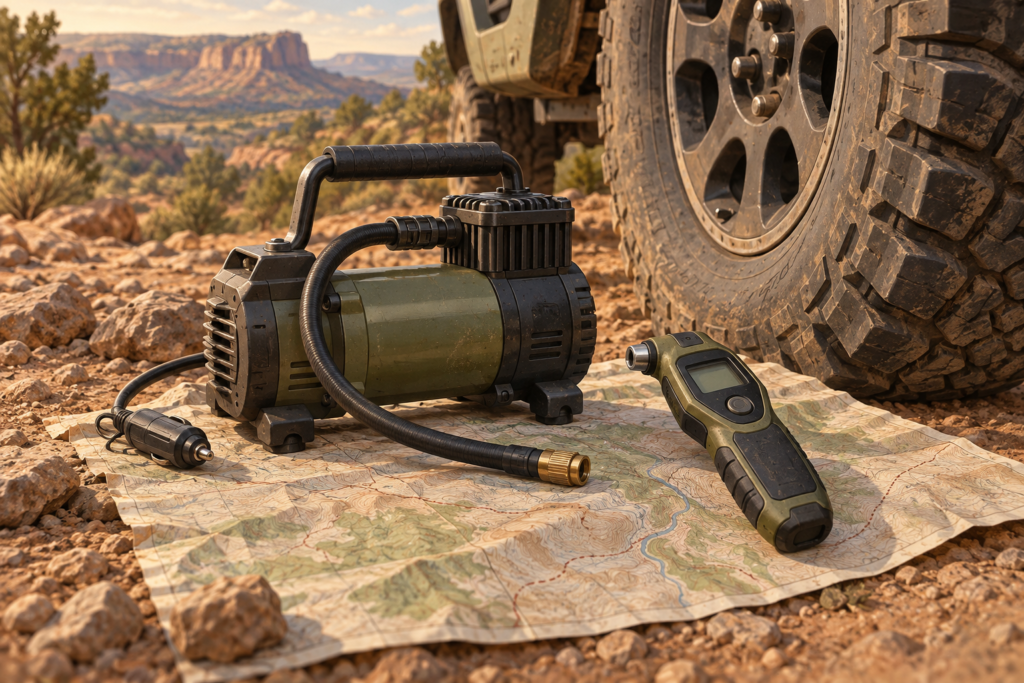
A portable compressor belongs on the shortlist if your trip requires tire-pressure adjustments. Compare the manufacturer’s tire-size rating, power connection and operating limits with your actual setup. Do that before choosing on price or advertised maximum PSI.
One example: VIAIR 88P, part 00088. VIAIR lists the analog 88P for tires up to 33 inches. Its published specifications include 12-volt power, battery clamps, a maximum working pressure of 120 PSI and a duty-cycle rating of 25 minutes at 30 PSI. These are manufacturer specifications, not results from a Rústiko test.
It is a candidate for a compact tire-inflation kit within those limits. We would compare alternatives for larger tires or more demanding repeated use. Read the manual before operation; a maximum pressure rating is not a measure of how quickly it will inflate your tires. Confirm that the retailer listing is the same model, since VIAIR also sells a digital 88P.
6. A usable spare and a wheel-change plan
Know what spare your Jeep carries, whether it is suitable for the trip, and whether you have the correct equipment and knowledge to use it. A tire problem can end a day long before a lack of lift height does.
For context, Mojave National Preserve’s off-pavement guidance calls out rugged spare tires and terrain-appropriate jacking equipment; its remote conditions may justify more preparation than a short local outing. Follow your vehicle and equipment instructions. A trail is a poor place to discover missing tools.
7. A recovery plan—not just a bag of straps
Before buying recovery equipment, identify the situations you are preparing for and learn the correct procedures from qualified instruction. Check your vehicle and equipment manufacturers’ requirements for recovery points, ratings and permitted uses. A list of accessories is not a recovery method.
If an obstacle exceeds the group’s skills or equipment, turning around can be the best recovery plan. We would choose a guided beginner trip before assembling a complicated winching setup we did not know how to operate. Tread Lightly! recommends off-highway skills training.
8. Navigation and a communication plan
Download the route information you need, carry a suitable backup and tell a trusted person where you are going and when to expect you. The NPS Trip Planning Guide stresses trip planning and cautions that phone service and battery life may be limited.
Decide how your group will stay in contact and how you would request help. For remote travel, assess whether satellite communication is appropriate; Mojave’s guidance specifically lists a satellite phone or messenger. A phone mount is convenient, but it is not the plan.
9. Supplies for the people in the Jeep
Pack water, extra food, clothing for changing weather, sun protection, personal medications and first-aid supplies. Bring suitable emergency shelter for your destination. The NPS Ten Essentials provides a useful starting framework; adapt quantities and equipment to the people, conditions and possible delays.
Set aside room for these essentials before filling the cargo area with optional gear. A day-trip label does not guarantee a day-trip return time.
10. Light, practical tools and a way to pack out waste
Carry a headlamp or flashlight with spare power and a small set of tools you know how to use. The NPS essentials list includes lighting and repair supplies. Add a trash bag: Tread Lightly! asks drivers to take their waste out with them.
Keep the kit accessible. If reaching a basic tool requires unpacking the entire Jeep, adjust the storage before buying more organizers. A short practice session at home can reveal what is missing and what you do not need.
What can wait?
A lift, rooftop tent, elaborate storage build or permanently installed compressor might eventually solve a real problem. None is an automatic first purchase. Match each upgrade to a limitation you have identified on suitable trips—not to a vehicle build you saw online.
For this first outing, we would prioritize vehicle condition, instruction and the preparation gaps above. Afterward, write down what you used, what you wished you had and what stayed untouched. That is a more useful shopping list for your second trip.
Before you leave
Confirm the route and conditions, inspect the Jeep, check that your equipment works, share the itinerary and make sure everyone understands the plan. If a gap cannot be resolved before departure, choose an easier outing or postpone it. The point is to come home wanting to go again.