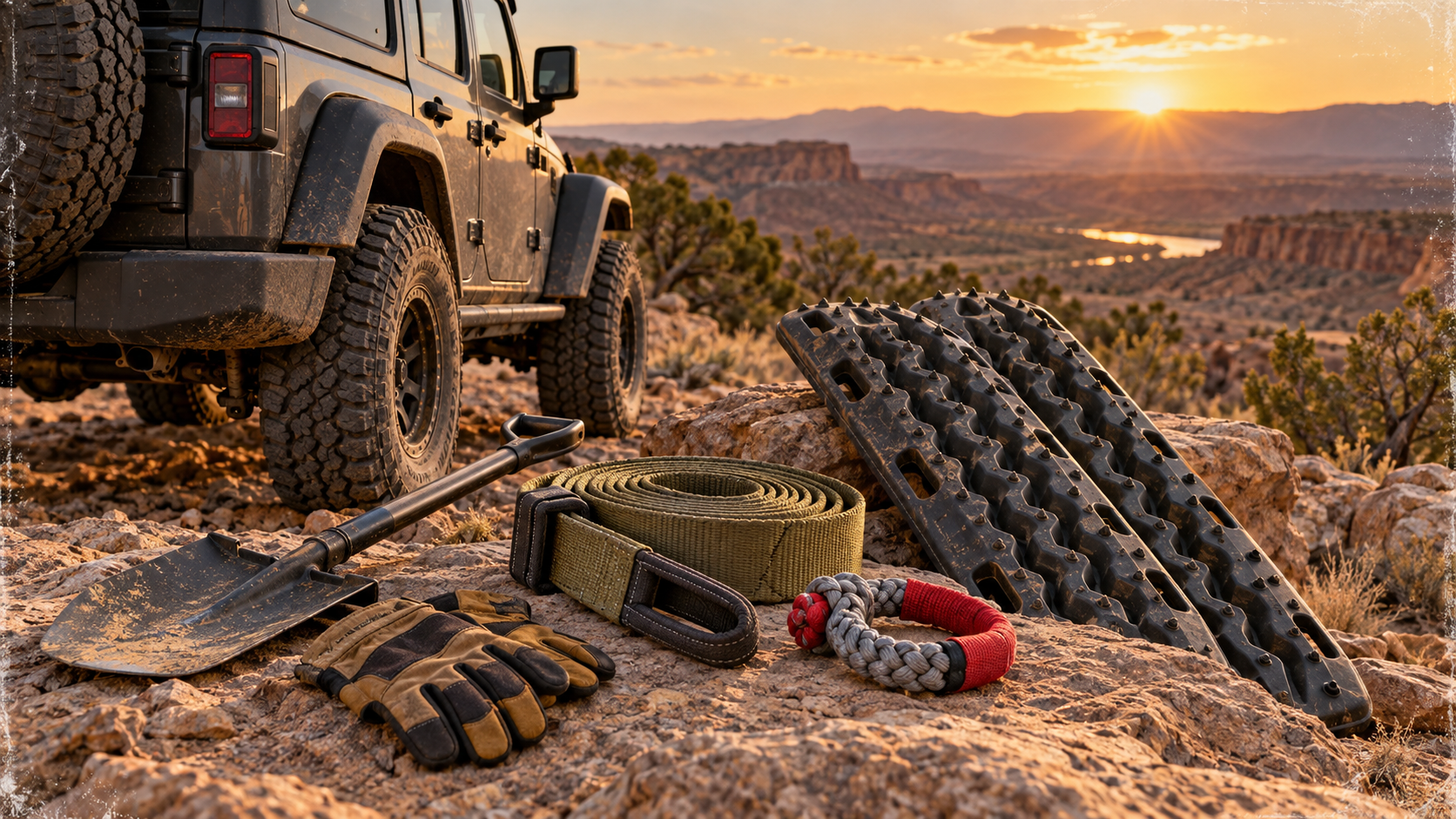
For a first Jeep or 4×4 trip, recovery boards and a rope solve different problems. Boards give your own tires a surface to grip when loose ground has taken traction away. A rope lets another vehicle pull, but only when the vehicles, attachment points, equipment and people are ready for that kind of recovery. Neither belongs in the cargo area as a promise that you can drive through anything.
As an Amazon Associate I earn from qualifying purchases. Some product links in this article are affiliate links.
For a beginner on a modest, legal route with a companion vehicle, boards are a sensible first purchase. They offer a way to address a straightforward traction problem without setting up a vehicle-to-vehicle pull. A rope becomes more useful as part of a planned, properly matched recovery system—not simply because it fits in a smaller bag.
Start with the kind of stuck you might face
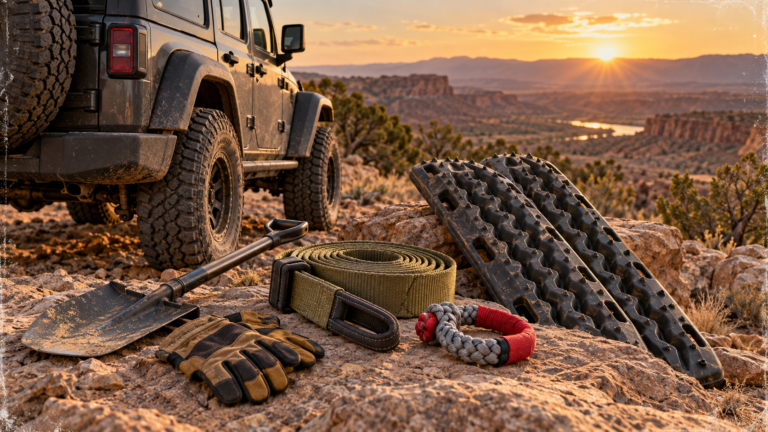
Imagine stopping on a sandy track, then finding that the tires spin when you try to move. If the vehicle is otherwise able to roll and there is a clear path onto firmer ground, digging and traction boards may address the immediate problem. That is the situation in which the MAXTRAX MKII Black Recovery Boards are relevant.
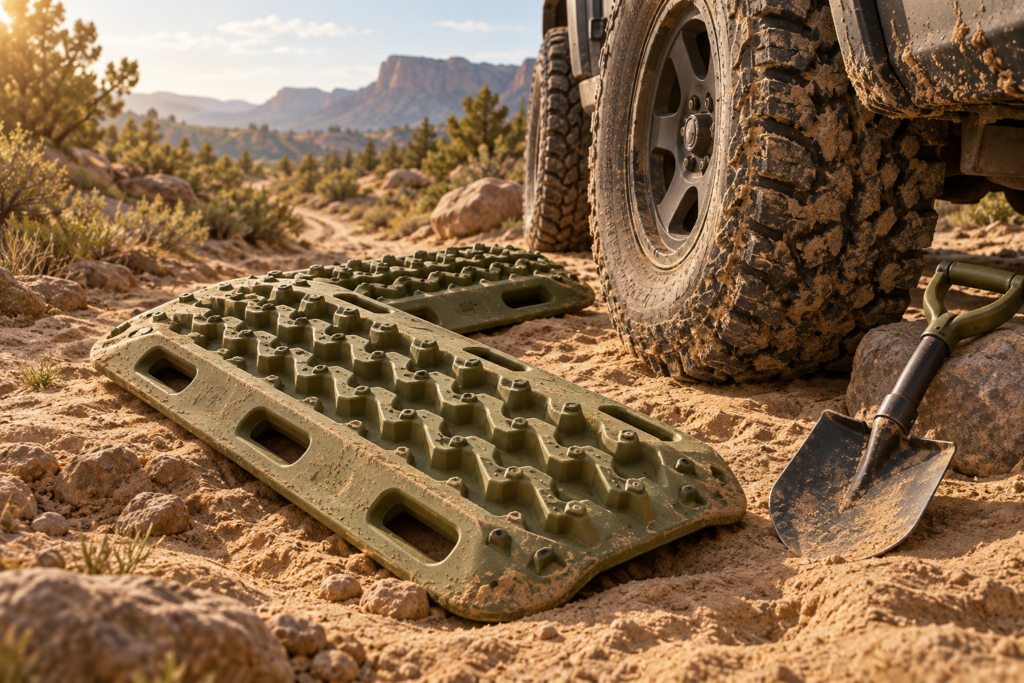
Now imagine the Jeep resting on its underbody, blocked by a rock, or aimed toward a drop-off. More tire grip alone may not solve the obstacle, and trying harder can make matters worse. Stop and assess before choosing equipment. If the route or recovery exceeds the group’s skills, turning back when possible or seeking qualified help is a better plan than improvising a pull.
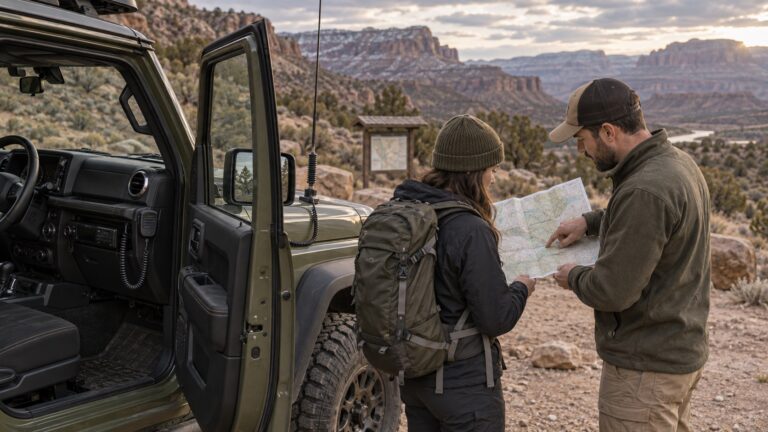
Route choice matters before either purchase. Check the land manager’s designated motorized routes and current conditions; visible tracks do not necessarily mean a route is open. Keep a first outing within the vehicle’s capabilities and leave room to reverse your decision.
What the MAXTRAX pair actually gives you
MAXTRAX describes the MKII Black package as two boards with two orange retrieval leashes. The exact Amazon listing also identifies two boards and two leashes in its box contents, despite using “Board” in the listing title. According to MAXTRAX, each board is about 45 inches long and 13 inches wide, and weighs about 7.5 pounds. The pair needs a deliberate storage spot in a loaded Jeep; measure that spot before deciding whether to carry boards inside or use a suitable secure mount.
The manufacturer’s instructions call for clearing material from around the tires, wedging the boards firmly against the tread in the intended direction of travel, clearing people from the area, and accelerating gently. They explicitly warn that wheelspin can melt the cleats and dig the vehicle deeper. If the tires do not grip, the instruction is to stop and reposition, not to add throttle. Read the full instructions before the trip rather than learning beside a stuck vehicle.
That makes the MKII pair a practical answer to lost traction, not a bridge, jack base or substitute for a sound driving line. Its size and the work of digging are real trade-offs. For more on the model itself, our MAXTRAX MKII recovery-board guide covers where boards fit in a broader plan.
Why “bring a rope” is not a complete plan
First, establish what rope means. A kinetic recovery rope or snatch strap stretches as a second vehicle pulls; an ordinary tow strap is not an interchangeable substitute. A winch line has another job again. The stretch that can help free a vehicle also stores energy, so a failed attachment or careless setup can have serious consequences.
A useful rope plan requires a capable second vehicle, a suitable approach and exit, compatible rated equipment, and verified recovery points on both vehicles. Do not assume that a bumper, tie-down, factory hook or trailer ball is an appropriate attachment. WARN specifically warns against using a trailer ball for recovery. Consult the vehicle documentation and equipment instructions, and get hands-on training before attempting a kinetic pull. Keep bystanders well clear and agree on communication before anyone moves.
Those requirements do not make rope unnecessary. If your group already has trained people and properly equipped vehicles, a matched rope system can address situations boards cannot. But buying one loose rope for a solo first trip adds little capability: there may be no second vehicle, no verified place to attach it and no practiced procedure for using it. A prepacked kit is not a shortcut around those checks; our recovery-kit buying guide starts with the plan rather than the bag.
Use these criteria before buying either
- Terrain: Loose sand, shallow mud or snow with a clear exit points toward digging and traction boards. A blocked, unstable or high-centered vehicle calls for a fresh assessment, not an automatic board or rope attempt.
- People: Are you traveling with someone who can help assess a stuck vehicle? A kinetic pull demands substantially more coordination and training than carrying a rope suggests.
- Vehicle setup: Check tire condition, a usable shovel, a gauge and a way to reinflate tires if your plan includes lowering pressure. Choose pressures using the tire and vehicle guidance appropriate to your setup; our tire-pressure gauge guide addresses one small part of that kit.
- Attachment points: If considering rope, verify the intended points and the ratings and compatibility of every component before the trip. If you cannot confirm them, do not plan on a vehicle-to-vehicle pull.
- Storage and retrieval: Boards take more room and may come back muddy. Rope is easier to stow, but inspect and care for it according to its instructions; compact storage does not make it ready to use.
A restrained first-trip recovery plan
Pick an easy route, check access and conditions, tell someone your itinerary, and travel with another vehicle if possible. Carry basic digging gear and keep it reachable rather than buried beneath camp supplies. If you choose the MKII pair, practice identifying where the boards would go while the vehicle is parked safely; do not stage a risky stuck scenario to justify the purchase.
When traction disappears, stop spinning the tires. Assess the surface, the vehicle’s position, nearby hazards and where it could travel if it moves. Clear an exit, follow the board instructions and keep everyone out of the vehicle’s path. If a gentle attempt fails, stop and reassess. Escalating to a pull is a separate decision requiring the right group, equipment and skills.
Bottom line: For a beginner who must choose one, the MAXTRAX MKII Black pair is relevant because it addresses a common, understandable traction problem without requiring another vehicle to pull. Choose a kinetic rope when you can verify the whole recovery system and learn to use it—not as a cheaper-looking substitute for boards. Neither choice makes a poor route or an unsafe recovery acceptable.