As an Amazon Associate I earn from qualifying purchases. Product links in this story may earn Rústiko a commission, at no extra cost to you.
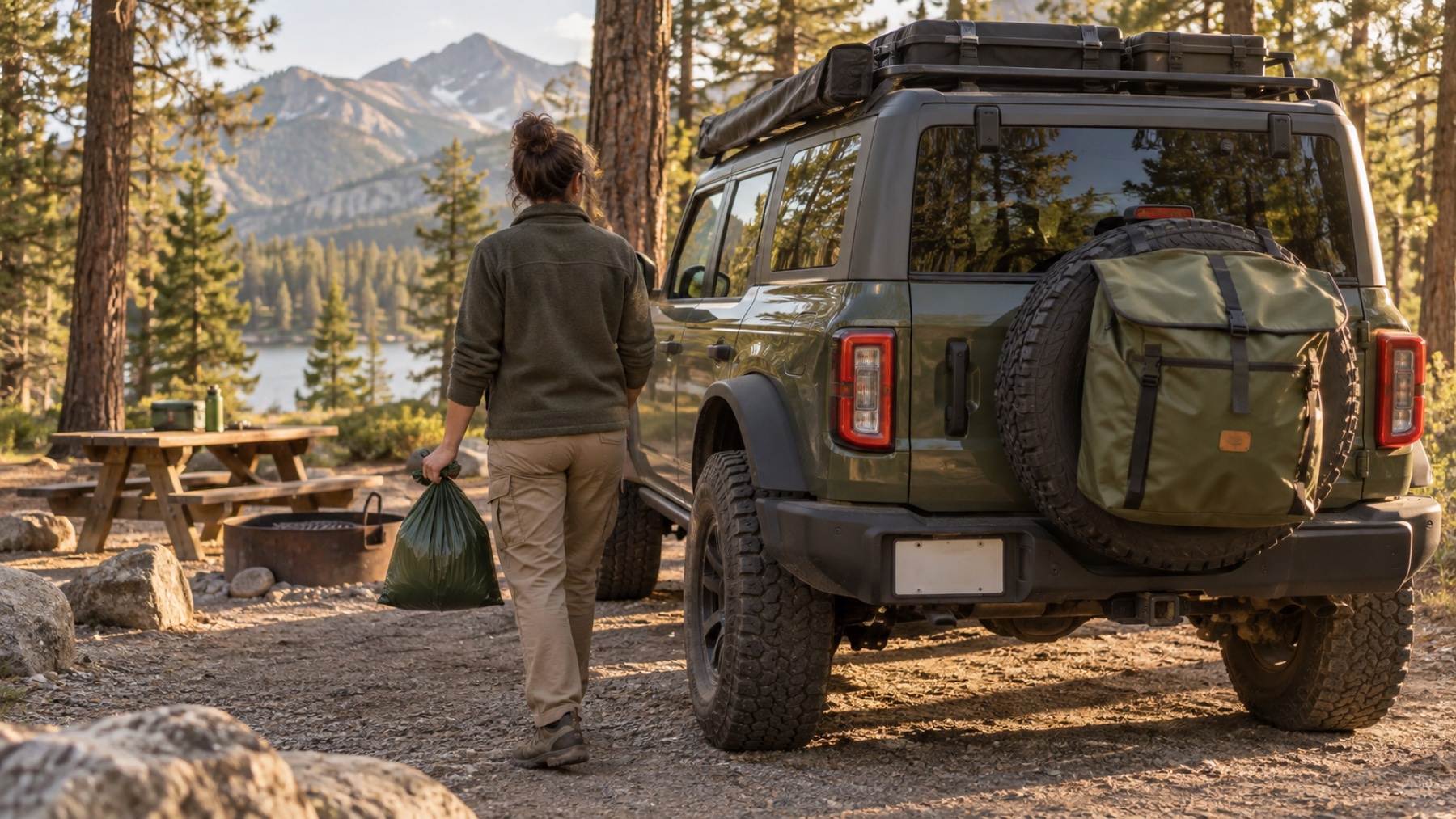
A clean campsite starts with a place for the waste you know you will create. The Trasharoo spare-tire trash bag gives a vehicle with a suitable external spare a dedicated carrying option for the trip out. Its maker describes an X-strap attachment and compatibility with a standard trash-bag liner. That makes it an organizational tool, not a wildlife-resistant food-storage container. Decide how trash must be stored at your destination before deciding where the bag will ride.
Inspect the fit with the vehicle packed
Check the tire size and the manufacturer’s load limits, then fit the bag according to its instructions. Confirm that it does not hide lights, the license plate, a camera you rely on or access to the spare. Test the tailgate through its full movement. Keep loose strap ends secured and recheck the attachment during travel. A bag that fits the tire can still interfere with the rest of the vehicle.
Start with a liner and a small supply of replacement bags and cleanup gloves. Close waste bags before moving them and keep sharp objects or leaking liquids from damaging the fabric. Do not use spare carrying capacity as a reason to overload a tire carrier or tailgate. The loaded vehicle and carrier still have their own limits.
Keep clean cargo separate
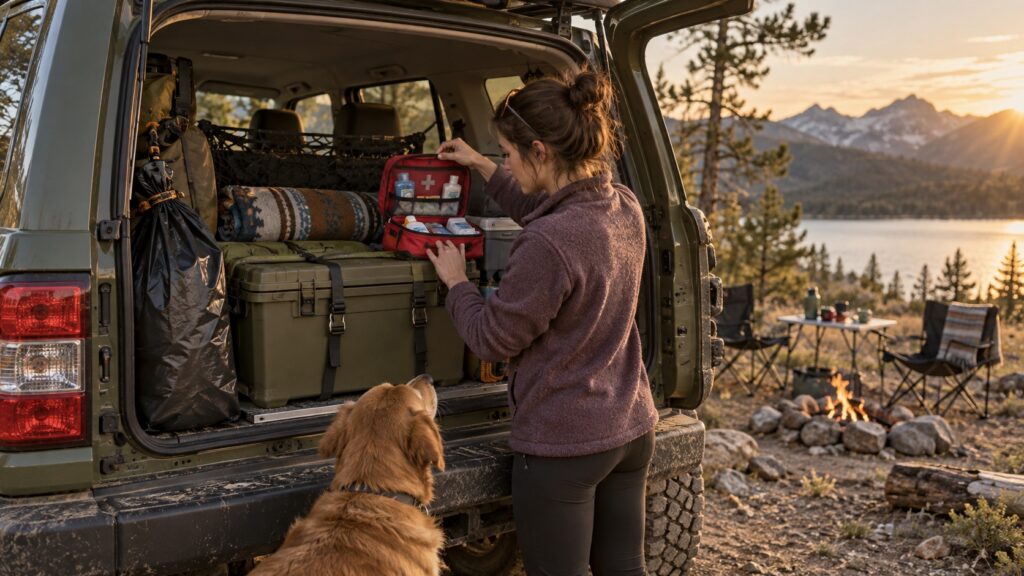
An OVS dry storage box can hold clean camp supplies if its size fits your secured cargo layout. Store liners and cleaning supplies where you can reach them before making food. Our cargo-layout guide puts frequently used equipment ahead of a tidy-looking stack of boxes. Give used gear a separate destination so a leaking wrapper does not end up with bedding or camera accessories.
Make cleanup part of the meal
If dinner comes from a Coleman Triton two-burner stove, plan the cleanup before lighting it: capture packaging, collect food scraps and follow the campground’s dishwater and disposal rules. Let equipment cool before packing. The first camp-kitchen guide addresses setup; the final step is leaving the site ready for the next visitor, not just getting the stove back in its case.
An external bag is not overnight wildlife storage
The National Park Service advises securing food and disposing of waste appropriately; local requirements can call for designated lockers, approved containers or other specific methods. Food-scented trash must follow those rules too. Do not leave it in an external fabric bag overnight or unattended where that would attract wildlife or violate site requirements. Before arriving, identify the approved disposal point and any pack-out rule. The useful result is a complete journey from meal to lawful disposal—not merely moving the smell outside the Jeep.