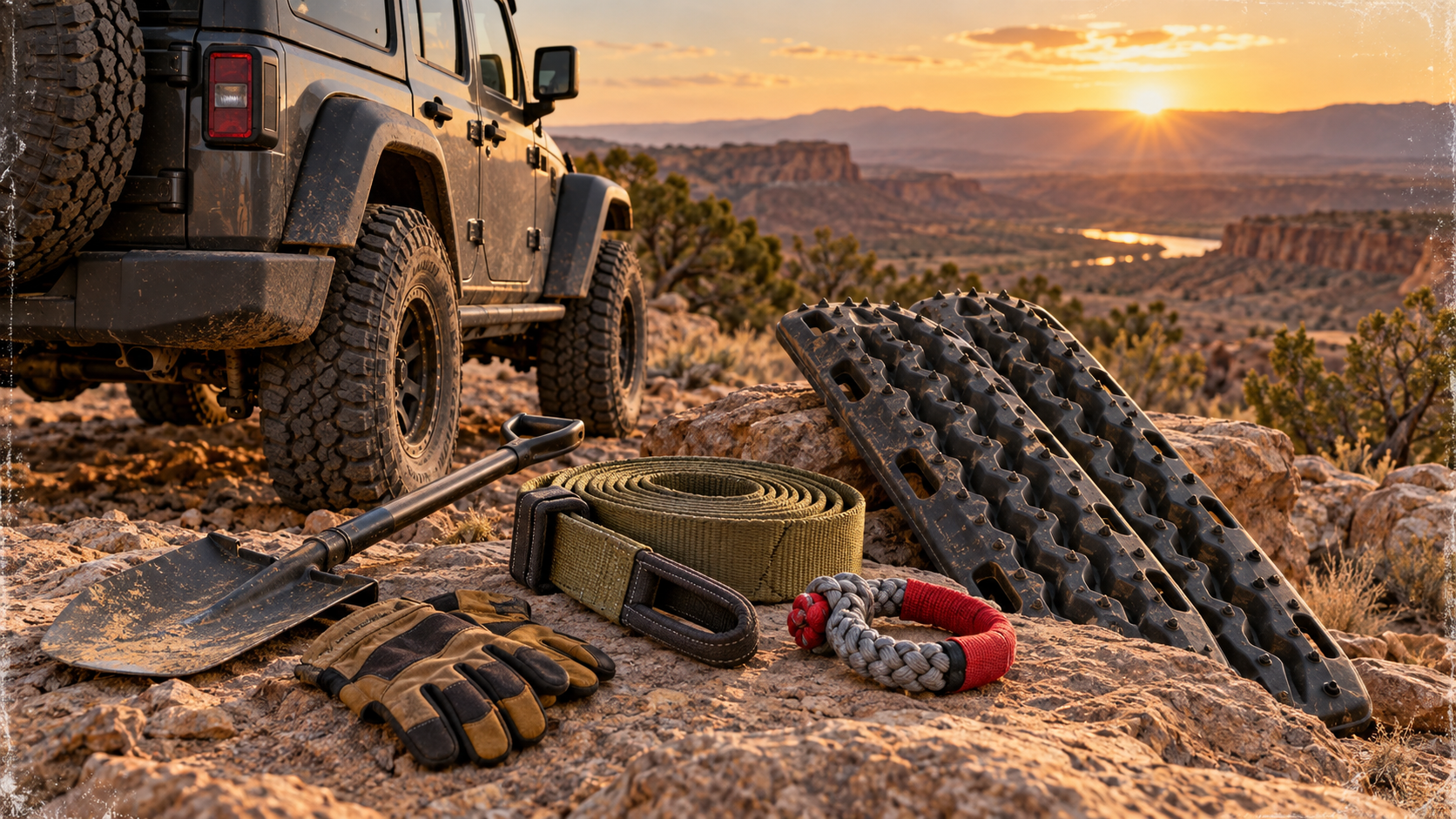
A bag of recovery gear can feel like a plan until a vehicle is stuck and nobody knows where to attach anything. A beginner is better served by understanding the route, the group, and the conditions that would trigger a turnaround. Buying equipment before those questions are answered can add weight and false confidence without making the trip safer.
As an Amazon Associate I earn from qualifying purchases. Some product links in this article are affiliate links.
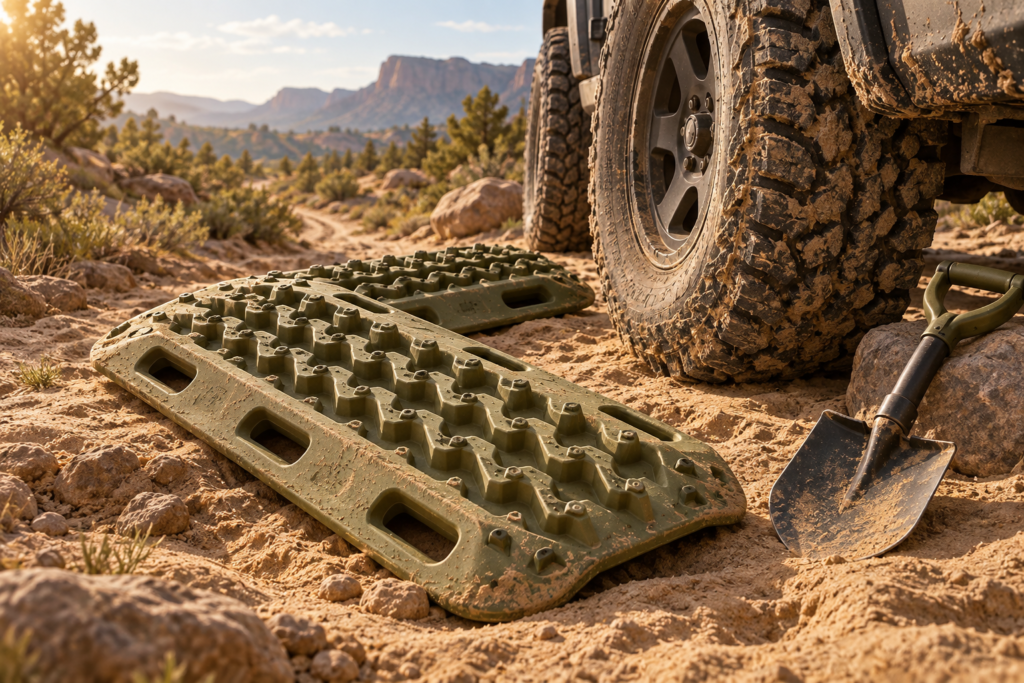
Once you know the terrain and the recovery method you can use safely, compare a specific tool such as MAXTRAX MKII recovery boards with the conditions on your route. Buy it only if it fills a defined need and you understand the maker’s instructions.
Prevent the recovery you can prevent
Choose a route that fits the vehicle and the least experienced driver. Check land-manager access information, weather, and the point where you will turn around if time or conditions deteriorate. Tread Lightly! advises staying on designated routes and assessing obstacles. Those are practical risk controls, not just etiquette: taking an unsuitable side track can create a problem that gear was never meant to solve.
Walk a questionable section only where doing so is safe and permitted. Agree with the group that turning back is an ordinary choice, not a failure. If the road is more technical or remote than planned, a different destination may be the best decision of the day.
Know the vehicle and its limits
Read the owner information for the exact Jeep or other 4×4, including approved recovery points and restrictions. Note its tire and wheel setup, ground clearance, spare, and the equipment actually on board. Do not infer that a metal loop is a rated recovery point because it looks strong. The consequences of a wrong connection can be severe.
The National Park Service's Joshua Tree backcountry guidance lists spare-tire and self-rescue preparation for its remote roads, along with fuel, maps, and supplies for delays. That is a useful prompt to think about the whole situation. It is not an instruction to buy every item on a universal checklist for every trail.
Decide who can help and how to call
For a day trip, tell a trusted contact where the group is going and when to expect a return. Decide how the vehicles will communicate if separated and what the group will do if cellular service is unavailable. In remote areas, the ability to request outside help may be more valuable than another accessory in the cargo area.
Traveling with an experienced companion can change the plan, but it does not transfer responsibility to them. Discuss likely obstacles and recovery limits before departure. If the only proposed response to a difficult route is “we have a strap,” choose another route.
Then choose equipment and training
Once you understand a specific need, compare equipment rated and instructed for that use. WARN publishes operator literature for individual winch models, illustrating why generic internet demonstrations are a poor substitute for the exact manual. Straps, shackles, winches, and vehicle attachment points each require their own instructions and compatible ratings.
Get hands-on training from a qualified instructor before attempting a complicated recovery. Practice basic communication and decision-making without creating an artificial hazard. A kit should support a method the group understands, not become the method itself.
The right first purchase may be none. Spend the first trips learning the terrain and your vehicle, then buy a specific missing capability. If you cannot describe the recovery problem an item solves or how its instructions apply, leave it on the shelf until you can.