A portable compressor is easy to shop for by its biggest number. A listing says 120 PSI, shows a Jeep beside a tire, and offers several versions under one product title. None of that answers the question that matters at the end of a trail: will the exact unit in the cart connect to your vehicle, reach your tires, and suit the amount of airing up you expect to do?
As an Amazon Associate I earn from qualifying purchases. Some product links in this article are affiliate links.
The VIAIR 88P Portable Compressor is a useful case study. The saved Amazon listing points to the original, battery-clamp 88P, identified as part number 00088. VIAIR also sells other models with similar names, and the Amazon page groups different styles together. Before judging any offer, make sure its selected style is the compressor you actually researched.
First, identify the exact compressor
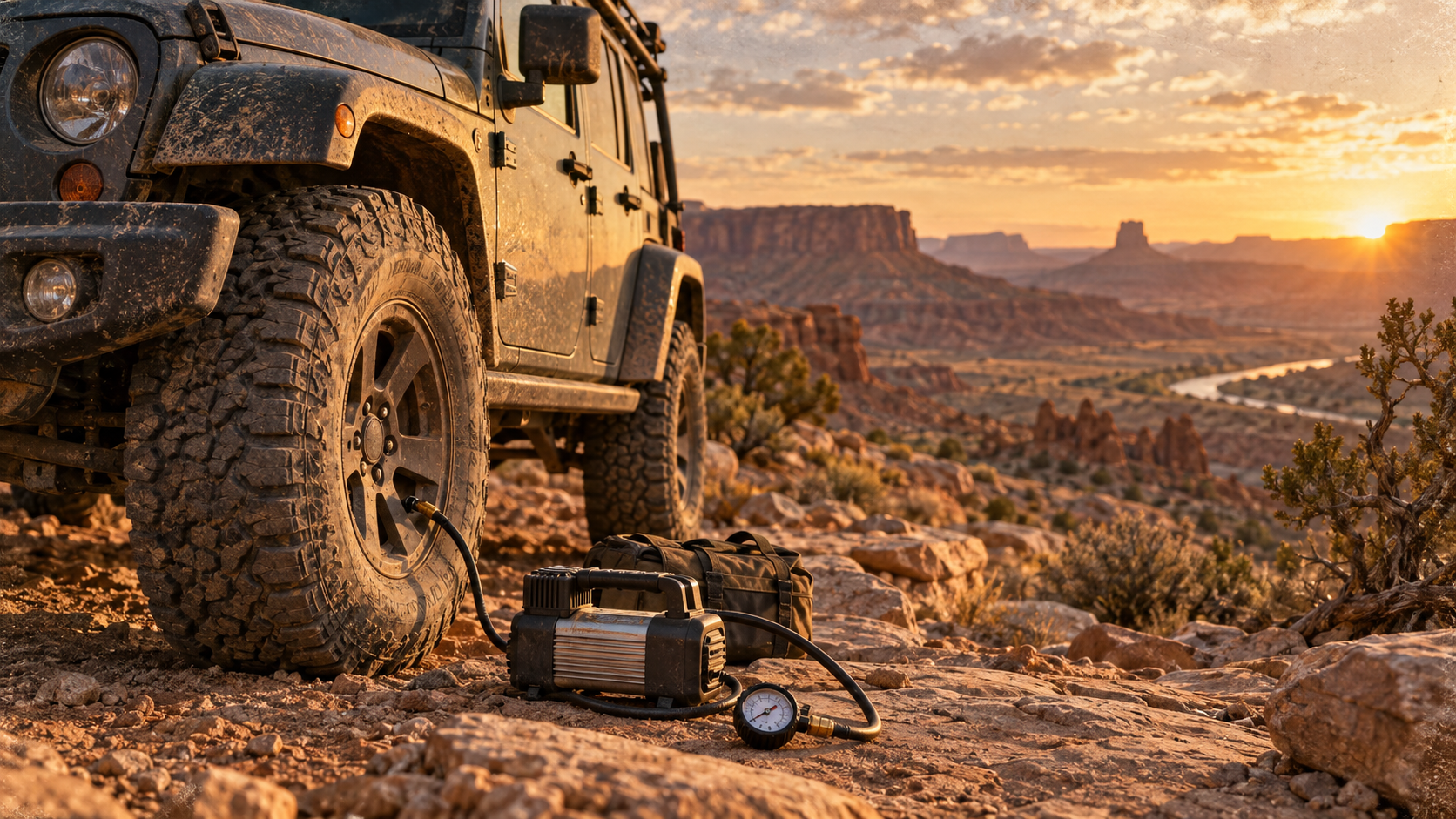
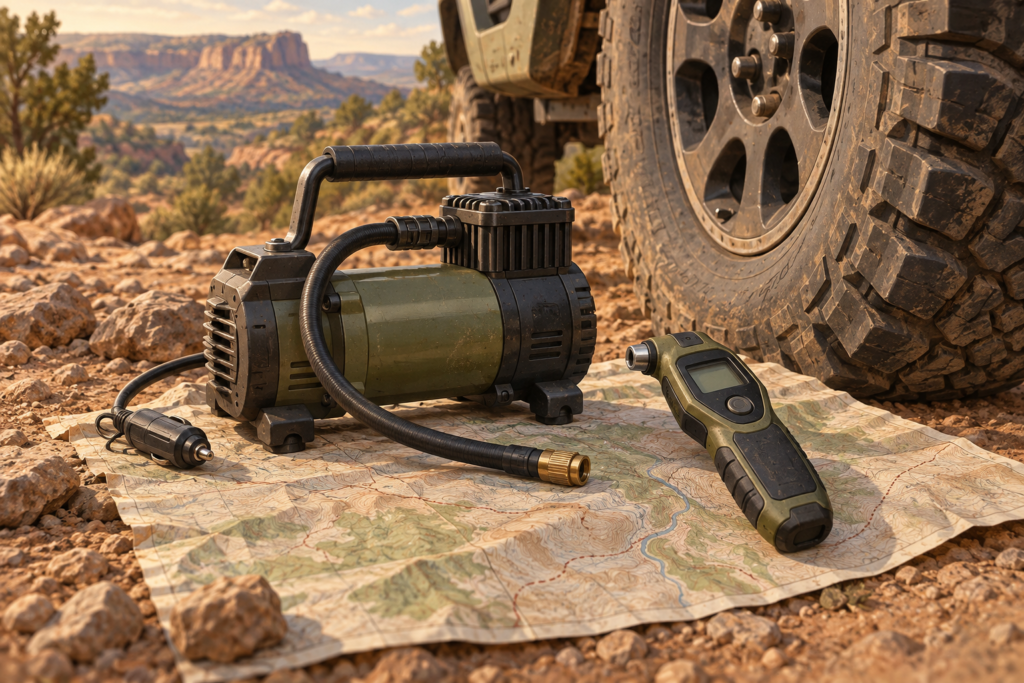
Verified facts: The linked Amazon page identifies B005ASY23I as “Original 88P.” VIAIR identifies the corresponding compressor as part number 00088. It is a 12-volt unit with battery clamps, a built-in pressure gauge, a twist-on tire chuck, a 10-foot power cord, and a 16-foot air hose. The manufacturer rates it for tires up to 33 inches and specifies a 25-minute duty cycle at 30 PSI.
Buying judgment: Match the model number and selected style before comparing specifications or offers. Do not assume that a photograph, review, or question on a page with multiple styles describes the one in your cart. In particular, do not buy the original 88P expecting the controls of a digital automatic style. If the listing switches styles when you select an option, check the model again before checkout.
Check where its power will come from
The original 88P is not a cordless pump or a small accessory-outlet inflator. VIAIR’s manual directs users to connect its clamps to the vehicle battery and run the engine during operation. That makes battery access a more useful buying criterion than whether the product title mentions Jeeps. Open your hood and consider where you can place the compressor on firm, dry ground while its cord reaches the battery and its hose reaches each valve stem. Account for the farthest tire, your spare, the way your Jeep is parked, and any cargo that could obstruct access.
The manual also says to use the compressor only in a well-ventilated, dry environment, keep it out of soft sand while running, and fully extend the power cord. Editorial judgment: If you cannot make a sensible battery-clamp setup work at your usual trailhead, this is the wrong listing to buy merely because the compressor itself is compact. Do not plan to substitute a cabin power outlet without documentation for that specific setup.
Read tire-size and duty-cycle claims as limits, not a stopwatch
VIAIR’s up-to-33-inch tire rating makes the 88P relevant to a beginner with a modest Jeep tire setup. It does not establish how long your four tires will take to refill. Tire size, starting pressure, target pressure, and the number of tires all affect the job. The stated 25-minute duty cycle is specified at 30 PSI; it is not a promise of uninterrupted operation under every condition. The manual also warns that the compressor becomes very hot and needs time to cool before storage.
Write down the size printed on your tires, then think about your actual routine. Are you topping up one tire occasionally, or airing up four after every trail day? Is your spare the same size? If your tires exceed the stated size rating, or repeated full-vehicle air-ups are central to the trip, compare a more suitable compressor rather than stretching this listing’s claims. Our 88P, 300P, and 400P comparison addresses that separate capacity decision.
Do not confuse maximum PSI with your target pressure
The 88P’s 120 PSI figure is its maximum working pressure, not an instruction to inflate a Jeep tire to 120 PSI. For normal road use, the pressure to consult is the vehicle manufacturer’s recommended cold inflation pressure on the driver-side tire placard or in the owner’s manual—not the maximum printed on the tire sidewall. NHTSA advises checking tires, including the spare, when cold and rechecking a pressure adjustment made to a warm tire once a cold reading is possible.
There is another listing detail worth noticing: the original 88P has a built-in gauge, but its manual says the compressor must be off to verify actual tire pressure. The reading while air is flowing is not an accurate final reading. A separate gauge can make a repeatable air-up routine easier; our tire-pressure gauge guide covers how to choose one. Neither a compressor’s maximum-pressure claim nor its built-in gauge replaces checking the correct pressure for your vehicle.
Check the included pieces, not just the hero photo
VIAIR lists battery clamps, the hose and cord, a twist-on chuck, an LED work light, a carry bag, and inflation tips for part number 00088. Its manual also lists an inline fuse holder. Use those details to inspect the exact offer’s description and condition. If a seller describes an open-box unit, for example, confirm which pieces are included rather than assuming the standard kit is complete. Check that the chuck suits the valves you intend to use and that the stated cord and hose lengths work for your layout.
The light and inflation tips may be useful at camp, but they are secondary to reaching every Jeep tire. A small bag is convenient only if you have an accessible place for it; burying the compressor under camp gear makes the end-of-day air-up more awkward. These are planning considerations, not claims that the included accessories will suit every vehicle or inflatable.
Then decide whether the offer is worth considering
- Confirm identity: Verify the selected style, ASIN, and part number before comparing it with VIAIR’s specifications.
- Confirm fit: Check tire size, battery access, reach to all valves, and whether the duty-cycle specification suits your intended routine.
- Confirm the offer: Inspect the seller, item condition, included accessories, shipping terms, and return terms as they appear at checkout. Do not treat a review of another style as confirmation of this one.
- Confirm the routine: Know your vehicle’s recommended road pressure, carry a way to verify pressure, and read the operating instructions before the first trail air-up.
Editorial judgment: The original 88P is a reasonable listing to examine when you want a portable, battery-clamp compressor for tires within VIAIR’s stated range. It is not automatically the right purchase for every Jeep, and a familiar model name alone does not establish a good deal. Buy only after the selected offer and your actual air-up plan agree.