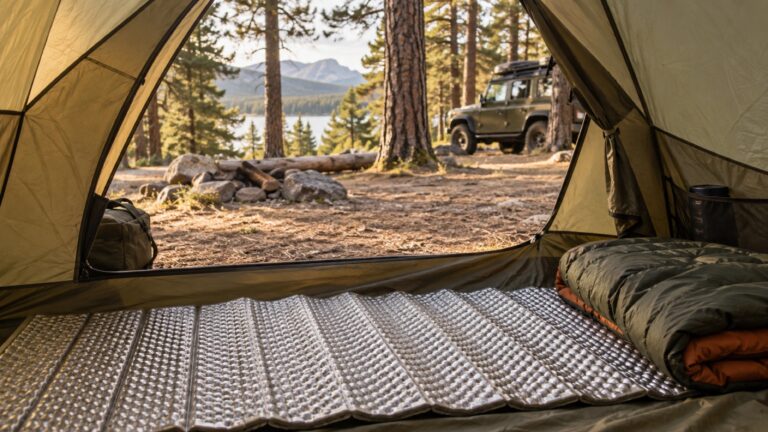
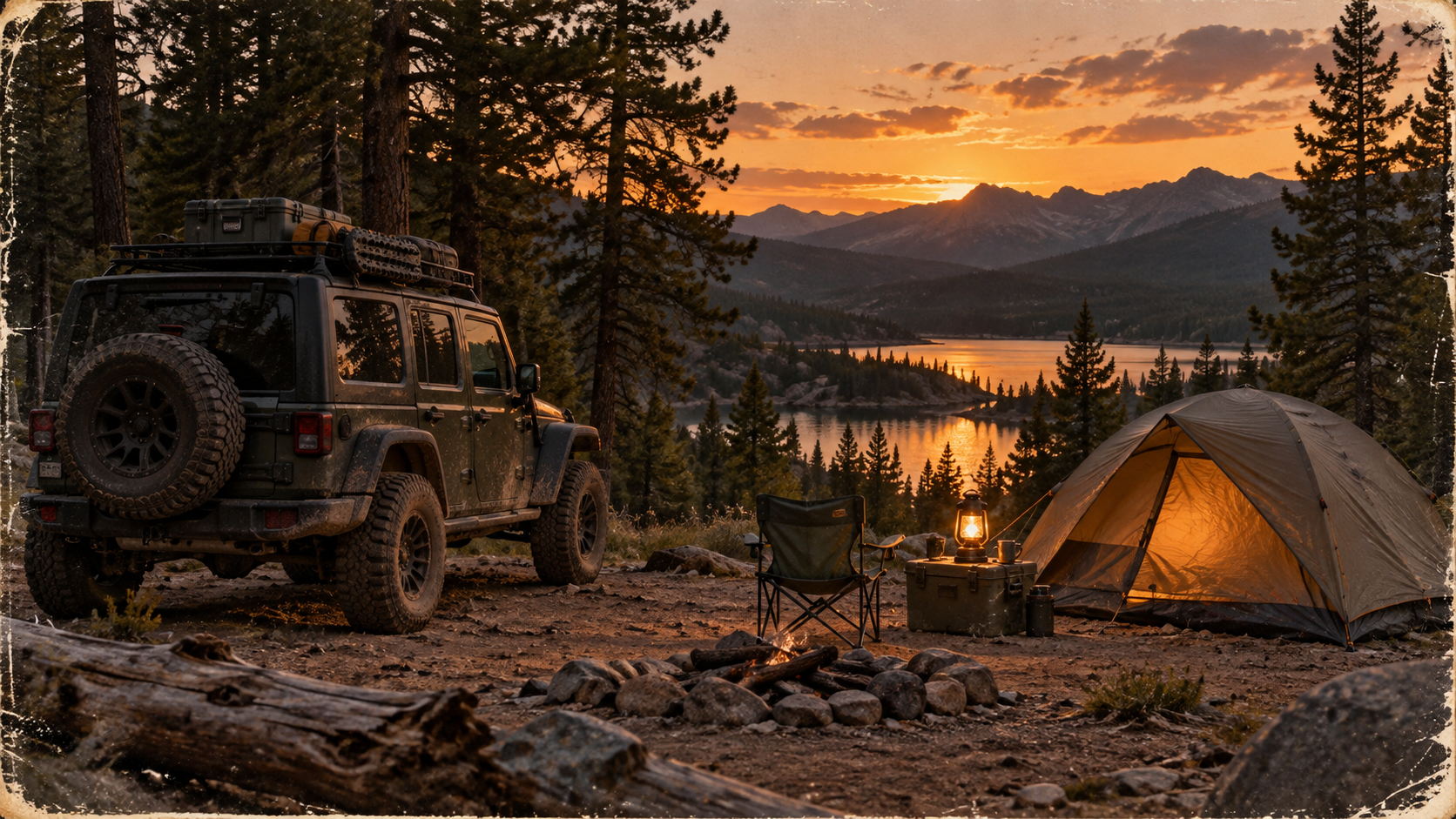
A first overland camp does not require a tent mounted to your Jeep. A ground tent lets you learn how much sleeping space you need, what fits in the cargo area, and how you prefer to arrange camp before committing to a more involved shelter. The useful question is not whether a tent looks expedition-ready. It is whether you can carry it, pitch it on your planned site, and sleep comfortably in it.
As an Amazon Associate I earn from qualifying purchases. Some product links in this article are affiliate links.
The Coleman Sundome Camping Tent is a relevant starting point because it is a conventional ground tent with an included rainfly, and Coleman offers a four-person version with a published floor size. Use it as a concrete example while applying the checks below. The linked listing offers multiple sizes, so confirm the option you are viewing before relying on four-person specifications.
Choose for the trip you will actually take
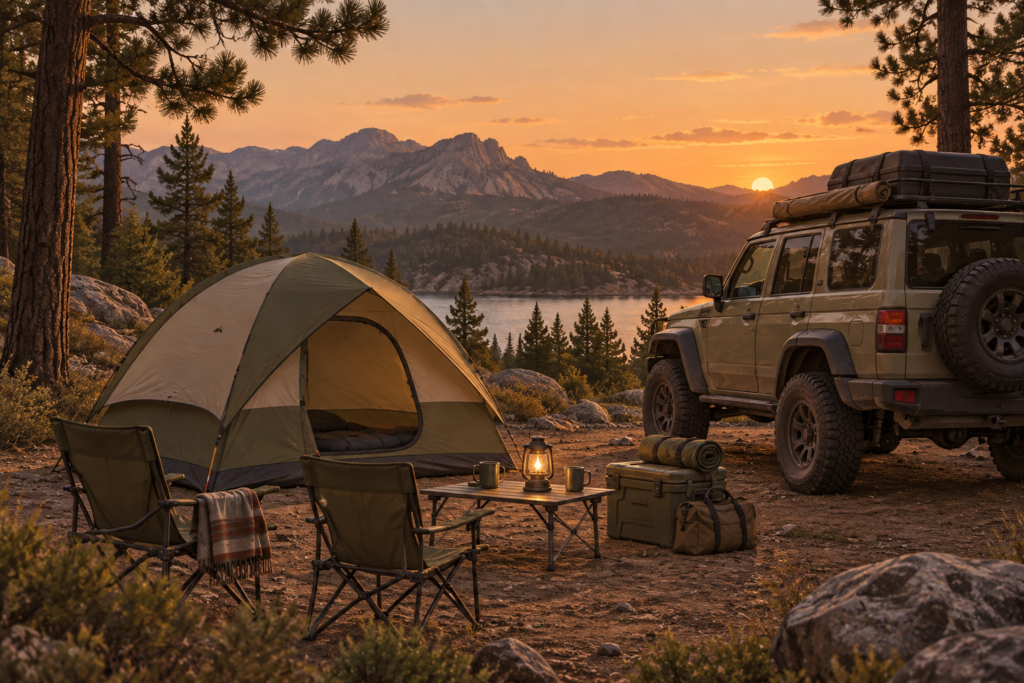
Begin with the number of sleepers, their sleeping pads, and the campground—not the number printed on the tent. A capacity label helps identify a model; it does not tell you how comfortably people and bags will fit together. For a first Jeep trip with two adults, a four-person tent may be worth considering for the extra floor space. That is an editorial judgment, not a promise that every four-person tent will suit every pair.
Write down where you expect to sleep. An established campground may have a designated tent pad as well as a separate vehicle parking space. A dispersed site may have different rules about where camping is allowed. In either case, do not assume the tent can go beside the tailgate merely because the Jeep can park there. Check the land manager’s rules and the space available for the tent before you leave.
Measure the sleeping layout, not just the floor
Coleman lists the four-person Sundome’s floor at 9 by 7 feet and says it fits one queen-size air bed. Those are useful comparison points, but they are not a drawing of your finished camp. A mattress can occupy much of the usable floor, and a dome’s walls narrow the space above it. Lay out the dimensions of your actual pads or mattress at home. Allow room to reach the door, change clothes, and keep footwear where it will not block an exit.
If you plan to sleep on individual pads, include their real widths and lengths in the layout. A wide pad, a dog’s bed, or a bulky bag can change the answer quickly. For help separating floor comfort from tent choice, the first-night sleeping-pad guide is a useful next step. A larger tent does not make an unsuitable pad more comfortable.
Check headroom separately. Coleman’s four-person product page gives conflicting center-height figures, so do not buy this tent on the assumption that you can stand inside it. Ask whether sitting up, kneeling to dress, and moving around the bed will be comfortable enough for you. If standing to change clothes is essential, compare verified dimensions for a taller design instead.
Decide where wet gear will live
Coleman describes the four-person Sundome with an included rainfly, windows, a ground vent, and an electrical-cord access port. Its specifications list one door and no vestibule. For a Jeep camper, the missing vestibule matters more than an accessory port if muddy boots, wet rainwear, and recovery gear need somewhere to go. Plan an outdoor spot for footwear and keep wet equipment out of the sleeping area; do not count on a sheltered storage room attached to this tent.
The rainfly and Coleman’s seam and corner details are product features, not a guarantee of a dry night in every storm. Ventilation also involves a trade-off: closing openings against blowing rain can leave the interior feeling stuffier. Match the shelter to the forecast and the exposure of your site. If severe weather is likely, changing the trip plan is more sensible than treating a tent’s marketing language as a safety rating.
Check the site and the Jeep together
Before ordering, compare the tent floor with the tent pad or other permitted pitching area at your destination. Leave space for staking, lines, the door swing, and a path around the shelter. The National Park Service advises choosing level ground outside low spots where rain can collect and watching for hazards such as dead branches. It also advises keeping the tent a safe distance from cooking and fire areas.
Then check the cargo plan. A ground tent avoids a roof-mounted sleeping setup, but it still competes for space with water, food, bedding, and tools. Decide where the tent bag will ride without burying the items you need at your first stop. Keep the tent accessible enough to pitch before dark. If it rains at departure, reserve a way to separate a wet tent from dry bedding in the Jeep.
A groundcloth is optional rather than a cure for poor site choice. If you use one, the National Park Service advises folding any material that extends beyond the tent underneath it so it does not collect water. Follow the tent’s setup instructions and use the designated camping surface where one is provided. For the broader arrival routine, see the separate first-campsite layout guide.
Do one complete pitch before departure
Set up the exact tent you will carry at home, including the rainfly. Inventory the poles, stakes, lines, and instructions; check that the door works and that every attachment point has what it needs. Coleman advertises a quick setup for the Sundome, but your first attempt may take longer, particularly in fading light or on difficult ground. A practice pitch tells you more than a setup-time claim.
Use that rehearsal to answer three buying questions. Can your group put it up without forcing a pole or relying on the Jeep as an anchor? Does your sleeping arrangement leave a workable path to the door? Can you repack the shelter and still fit the rest of the trip’s cargo? If any answer is no, adjust the layout or reconsider the size before camp, not after sunset.
The practical verdict
Consider a four-person Sundome if you want a straightforward ground shelter for a first car-accessible camp and your measured sleep layout fits its published floor. Pass on it if standing room or covered storage for wet gear is a requirement, or if your chosen campsite cannot accommodate the pitched tent. Verify the size and color option on the listing, practice the setup, and let the first trip teach you what your next shelter needs to do.